FORTRAN
- Last Updated: 10/26/2018 12:00:00 AM
- Site: http://www-03.ibm.com/ibm/history/ibm100/us/en/icons/fortran/
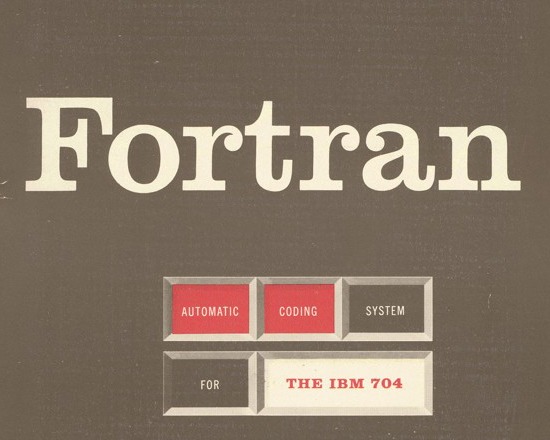
FORTRAN (from 'formula translating system') was a major programming language first developed by IBM in the late 1950s. While originally intended for science and engineering, with substantial drawbacks for users seeking to conduct text processing, its wide availability in academic computing centres neverthless made it an attractive choice for Humanities scholars seeking to automate research processes.
Documentation
Creator(s): John Backus and IBM
Creator's Email:
Repository:
Attributes
- Type of analysis: Analysis Programming
- Type of license: Commercial
- Background Processing: Doesn't Run in Background
- Web Usable: Other
- Ease of Use: Difficult
- Usage: Widely Used
- Historic Tool (developed before 2005): Influential No longer in active development
- TaDiRAH Goals: Creation
- TaDiRAH Methods: Other (analysis) Programming Statistical Analysis
List this tool appear on
Rating
Suggested Tools
Comments
Please see the following papers for more information on FORTRAN in relation to Humanities scholarship:
Allwright, Christine. \"Software Review: FISHER: A String-Handling Package.\" Computers and the Humanities 10.5 (1976): 297-298. Web.
Dilligan, Robert J. \"Introductory FORTRAN textbooks: An Overview for Humanists.\" Computers and the Humanities 7.6 (1973): 399-406. Web.
Kline, Edward A. \"A Computer-Assisted Graphemic Analysis of Beowulf: Purpose and Procedure.\" Computers and the Humanities 2.5 (1968): 211-213. Web.
Koster, Patricia. \"Words and Numbers: A Quantitative Approach to Swift and Some Understrappers.\" Computers and the Humanities 4.5 (1970): 289-304. Web.
Silva, Georgette. \"Phontrns: An Automatic Orthographic-to-Phonetic Conversion System for French.\" Computers and the Humanities 3.5 (1969) 257-265. Web.
Sowa, Cora Angier and John F. Sowa. \"Thought Clusters in Early Greek Oral Poetry.\" Computers and the Humanities 8.3 (1974): 131-146. Web.
Turner, Ronald C. \"Letter to the Editor.\" Computers and the Humanities 4.1 (1969): 74. Web.