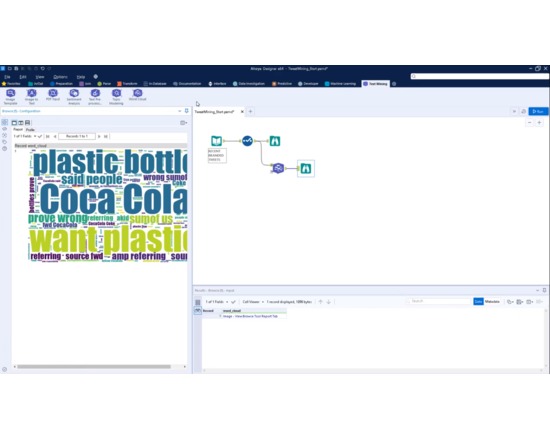
Alteryx is an online commercial data analysis service. Among its capabilities are optical character recognition, sentiment analysis, and topic modeling with Text Mining. You can quickly build predictive models without coding through its intuitive graphical user interface. It has many visualisation options among which is the word cloud.
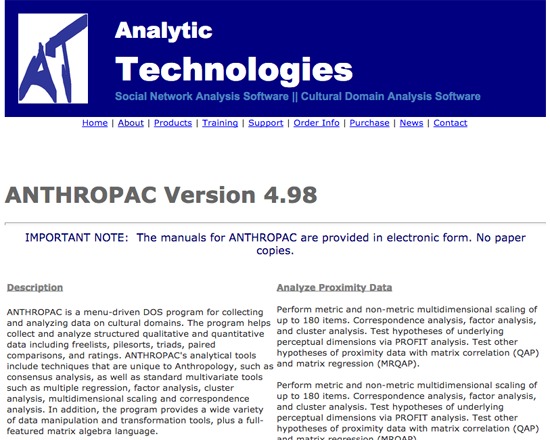
ANTHROPAC, now in version 4.98, is a long-standing menu-driven DOS program developed for working with anthropological and other cultural data. It assists both the collection and analysis of datasets, and can accommodate both qualitiative and quantitative information. ANTHROPAC includes analytic tools such as consensus analysis, factor analysis, cluster analysis and correspondance analysis, in addition to data manipulation and transformation functions. It imports and exports data via ASCII formats, and includes an extensive reference manual, a user's guide and a methods guide tailored for cultural domain analysis.
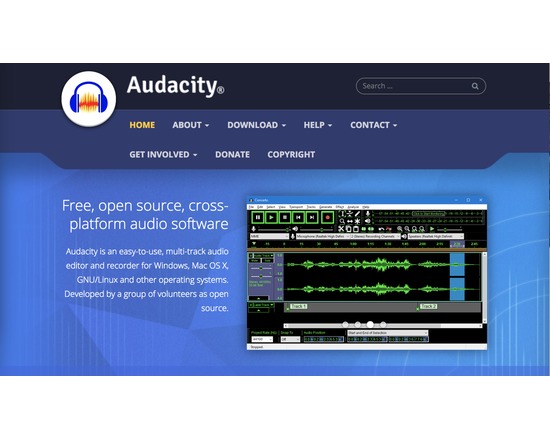
Audacity is a free, easy-to-use and multilingual audio editor and recorder. Basic features, as listed on their website, include: Record live audio. Record computer playback on any Windows Vista or later machine. Convert tapes and records into digital recordings or CDs. Edit WAV, AIFF, FLAC, MP2, MP3 or Ogg Vorbis sound files. Cut, copy, splice or mix sounds together. Change the speed or pitch of a recording.
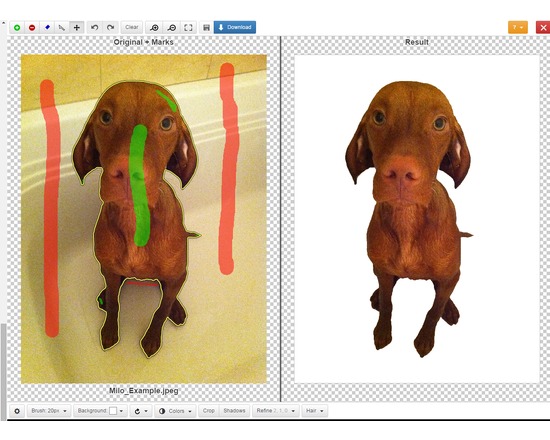
Clipping Magic lets you easily edit out the background of photos. Mark up the foreground and background in the editor, use the scalpel tool for precision selections, then download the new image. You can upload and edit as many images as you like but you must have a paid subscription to download ($4 - $15 per month depending on the number of download credits needed). Officially supported file formats: JPEG, PNG, GIF images using sRGB color space. CMYK displays the wrong colors in the editor but the resulting image is correct. Current max image resolution is 4 megapixels. The Clipping Magic website includes tutorials for each of their tools. Feature List: Web based graphical user Interface, with quick feedback on your edits. Smart Algorithm minimizes the amount of work you need to put in - you do not need to trace the entire outline of your image Pan and Zoom to any level necessary allows you to inspect details while quickly navigating your image. Undo / Redo Auto-Save Configurable Auto-Brush-Size: The brush size adapts dynamically to your zoom level so that you can easily zoom in to make detailed edits. Refine Edges gives you full control over smoothing, feathering and offset. Dedicated Hair Tool separates out hair from clean and distinct backgrounds. Color Levels - tune brightness, shadows and highlights, and the color temperature. Rotate / Straighten. Crop & Resize Shadows creator with both drop shadow and ellipse shadows. Background Color or transparent background options Configurable Defaults Bulk Clipping Share Your Results with a secure URL They also offer a paid REST-oriented Web API for automating the uploading of images and downloading results. Subscriptions range from $50 to $250 per month.The editor can be integrated into a website using ClippingMagic.js
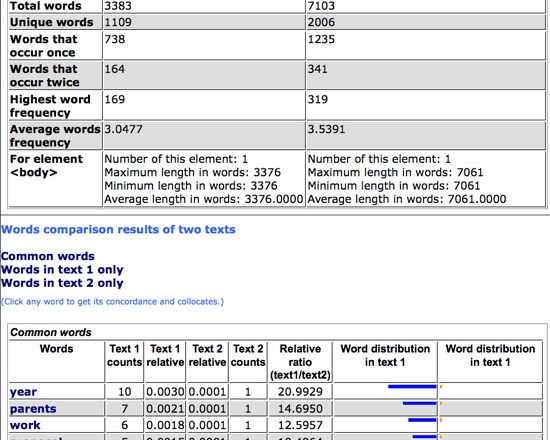
This tool compares two documents by comparing the words in each according to user specifications. XML and plain text versions are also available in the TAPoRware toolsets. This tool’s functionality has been incorporated into Voyant available online at www.voyant-tools.org
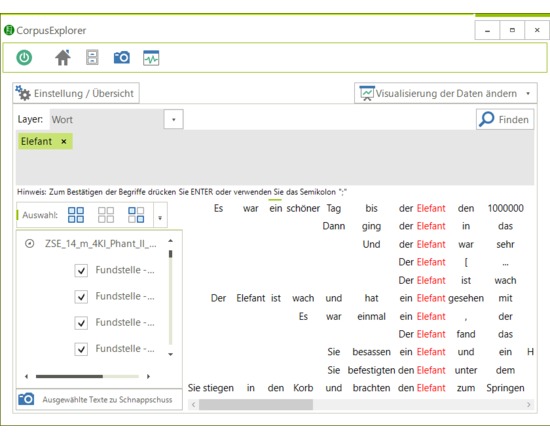
Software for corpus linguists and text/data mining enthusiasts. The CorpusExplorer combines over 50 interactive visualizations under a user-friendly interface. Routine tasks such as text acquisition, cleaning or tagging are completely automated. The simple interface supports the use in university teaching and leads users/students to fast and substantial results. The CorpusExplorer is open for many standards (XML, CSV, JSON, R, etc.) and also offers its own software development kit (SDK)
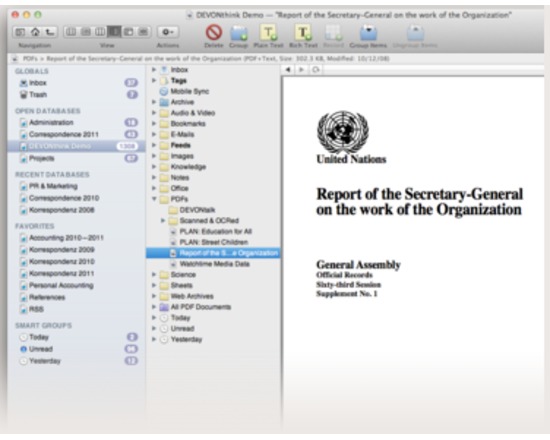
DEVONthink is a database that helps users organize, manage and collaborate on digital files, including Office files, links, e-mails, research data and PDFs.
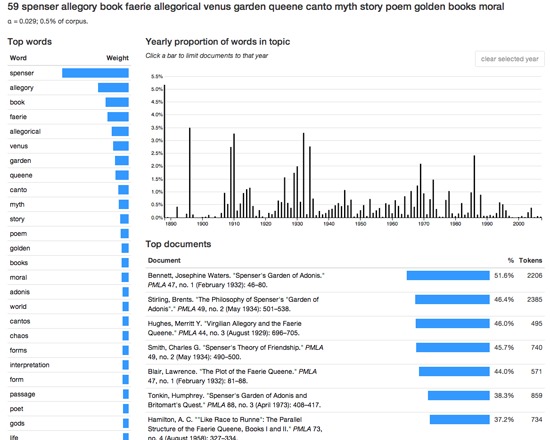
The DfR Browser is a free, open source visualization interface for exploring aggragates of articles from the JSTOR database. It uses topic modelling, co-occurrances and document metadata to provide multiple views on the corpus of interest based on topic searches, via several specialized views such as scaled, list and yearly subviews. Users can test the DfR browser via the provided web demo, which incudes a broad selection of pre-loaded topics, or download the source code to use the tool with their own data. The tool's output can be imported into Mallet for further analysis.
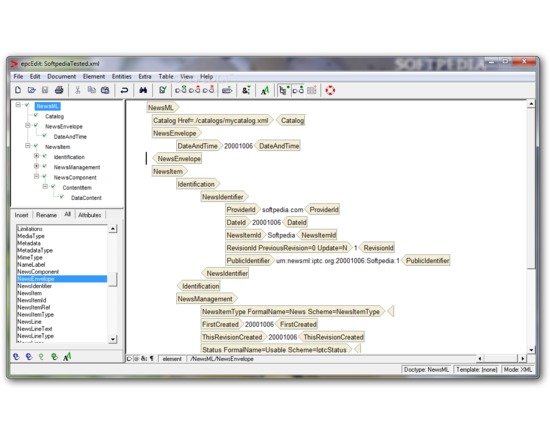
A structured text editor that may be used to create, edit, validate and convert XML and SGML documents. EpcEdit contains an integrated validating parser, an editor for CALS and HTML tables, an attribute editor and an element manipulation tool. Features: XML/SGML parser with full support of Oasis SGML-Open catalog files Document structure mapping, enabling users to visualise the construction of an XML/SGML document without a DTD Attribute editor that supports conformance checking of attribute values and has special support for ID and IDREF attributes Configurable user interface that may be integrated with other tools through use of Tcl programming language