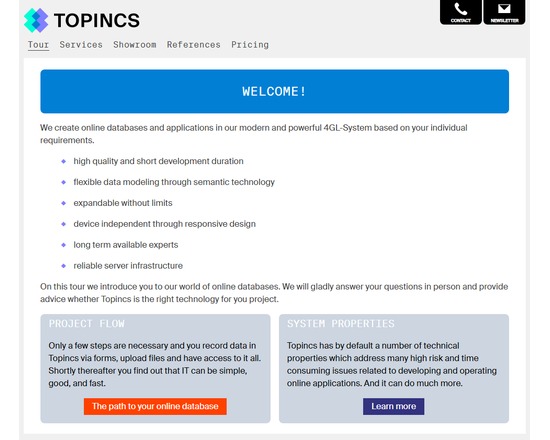
By designing and implementing services, the data can be manipulated, transformed and aggregated through an virtual object oriented programming interface driven by the data model. This allows sophisticated use cases where different user groups with different rights are presented a completely different application working on the same database. In these cases development time ranges between 2 and 20 days.
A Topincs online database can be rented for a monthly fee. Topincs provide all services related to an online database: data modeling, programming, and support. They have special rates for educational institutions. Topincs can also be used as a Platform as a Service where the dark art of Topincs modeling and development must be studied online. The underlying semantic technology, Topic Maps, is taught there through hands on examples and will change your view on information technology.
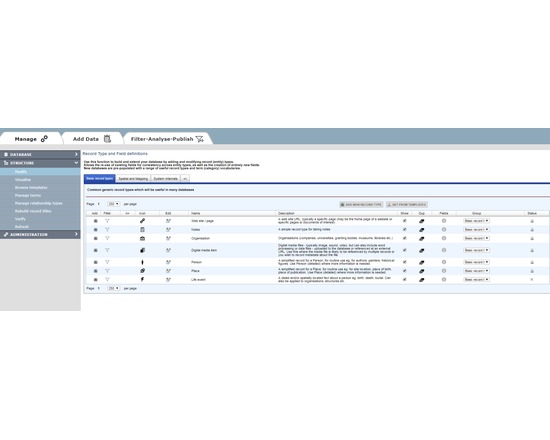
HEURIST (http://HeuristNetwork.org) is an extremely flexible, end-user oriented, web-based data management system designed specifically for Humanities data. Developed since 2005, it has been in active use across many projects since 2009. It is available both as a free web service for researchers (hosted at the University of Sydney Data Centre) or for installation on a physical or virtual server (Open Source on gitHub).
Researchers can design, create, manage, analyse, visualise and publish their own richly-structured database(s) through a simple web interface, without the need for programmer(s). Quite complex databases can be built in a few hours by borrowing structures and vocabularies published by other users. Databases can be designed and built incrementally, as existing data are not affected by changes in structure. Databases created by Heurist are stored in MySQL with a repeatable structure facilitating sustainability and independent access by other software.
Advanced features include record linking, graph structure, drill-down facet searches, rule-based queries, custom reports, linked map-timelines, network visualisation, normalised spreadsheet import, crosstabulation, XML feeds, XSLT transforms. The team provides initial email and skype assistance for project setup at no cost, and special customisations at modest cost.
Heurist is applicable in many domains including History, Archaeology, Anthropology, Cultural Research, Linguistics, Media Studies etc. It handles everything from text, tags and categories, through networks of rich relationships and offset annotations, to images, video, spatial data and dating (including non-western systems and dating uncertainty).
Sophisticated searches (including faceted and rule-based) can be saved, organised and rendered as layered interactive maps, timelines, network visualisations, crosstabulations, lists, custom reports, XML and XSLT transforms, all of which can easily be printed or embedded (live) in a website - Heurist provides the html code required to embed results in a web page or CMS.
Databases can easily be migrated later to a personal or institutional server. Since the data are stored in a standard MySQL database with a fixed and well-documented structure, the data can be accessed directly via SQL from most programming languages independently of Heurist.
Version 4.2 (Jan 2016 onwards) is available as a service via the Heurist website. Version 4 delivers a user-customisable interface of widgets, along with better mapping and visualisation. Existing version 3 databases are bidirectionally compatible with version 4.
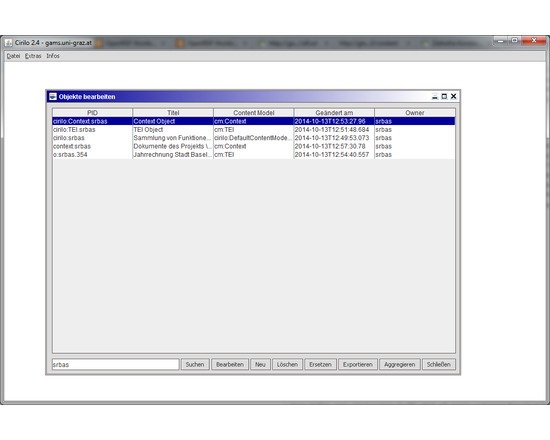
GAMS/Cirilo is an application developed for content preservation and data curation in FEDORA-based repository systems. Content preservation and data curation include object creation and management, versioning, normalization and standards, and the choice of data formats. The client offers functionalities which are especially prone to be used as tools for mass operations on FEDORA objects, such as ingest or replacement processes. Cirilo uses a collection of predefined content models, which can be used without further adjustments for standard workflow scenarios like the management of collections of TEI objects. It encapsulates functions for the resolvement of place names or ontology concepts, thus semantically enriching resources in the digital archive. Various dissemination options can also be assigned with the client. Cirilo is a contribution to the DARIAH-EU task “Reference Software Packages. The source code of the client can be found at https://github.com/acdh/cirilo, the documentation is available at http://gams.uni-graz.at/doku. An „archive-in-a-box“-installation package (Client including a FEDORA 3.5 instance) for Debian-based Linux-distributions can be downloaded from http://gams.uni-graz.at/download/cirilo-installer-2.4.tar.gz
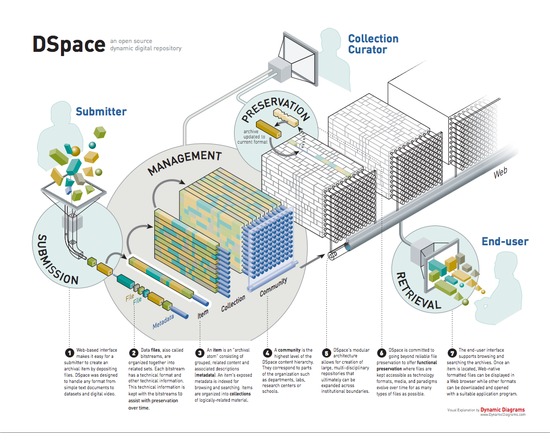
DSpace is the software of choice for academic, non-profit, and commercial organizations building open digital repositories. It is free and easy to install "out of the box" and completely customizable to fit the needs of any organization.
DSpace preserves and enables easy and open access to all types of digital content including text, images, moving images, mpegs and data sets. DSpace has an active community of developers and is used by thousands of institutions worldwide.
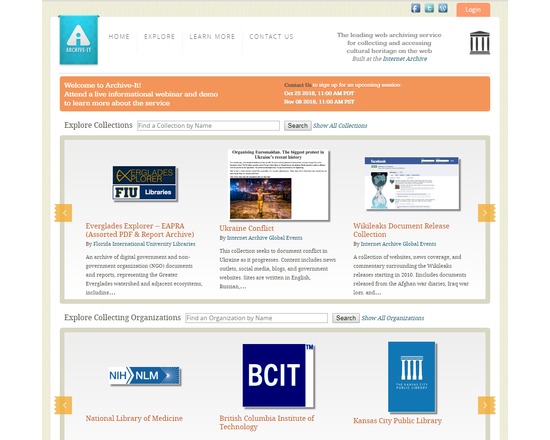
Archive-It is a subscription web archiving service from the Internet Archive that helps organizations to harvest, build, and preserve collections of digital content. Through our user friendly web application Archive-It partners can collect, catalog, and manage their collections of archived content with 24/7 access and full text search available for their use as well as their patrons. Content is hosted and stored at the Internet Archive data centers.
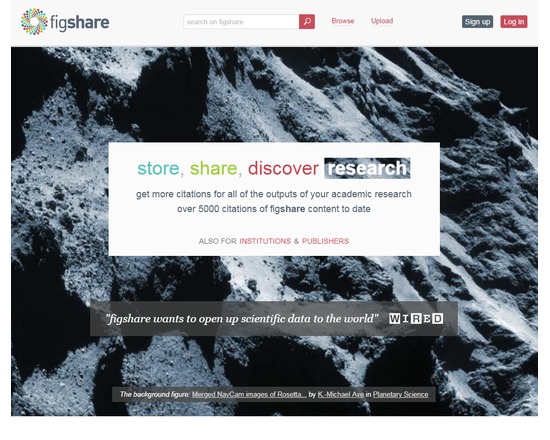
Figshare is a repository where users can make all of their research outputs available in a citable, shareable and discoverable manner. All file formats can be published, including videos and datasets that are often demoted to the supplemental materials section in current publishing models. Users of the site maintain full control over the management of their research whilst benefiting from global access, version control and secure backups in the cloud.
By opening up the peer review process, researchers can easily publish null results, avoiding the file drawer effect and helping to make scientific research more efficient. Figshare uses creative commons licensing to allow frictionless sharing of research data whilst allowing users to maintain their ownership.
Pinboard is a social bookmarking website that describes itself as "a fast, no-nonsense bookmarking site for people who value privacy and speed." The service lets users bookmark content from any web browser, offers browser plugins, and a way to save open tabs in a minimal, fast, and secure environment.
You can connect up to three Twitter accounts (search the archives of your tweets), and configure Pinboard to automatically mirror public bookmarks from your accounts on Instapaper, Pocket and Readability. All of your bookmarks from Delicious, Google Bookmarks, Diigo, Firefox, Safari, and many other sources can be imported to your Pinboard account. Everything on the site is available as an RSS feed and you can import and export data in a wide variety of formats.
Unlike other popular bookmarking services, Pinboard caters to users who value privacy. You do not need to have any public bookmarks to use the site. Pinboard does not serve any third-party content to logged-in users—that means no scripts, images, analytics trackers, and no ads. You do not have to provide any personally identifying information to open a Pinboard account. The only requirement is a working email address.
There is a third-party clients.
There is a one time fee of $11.
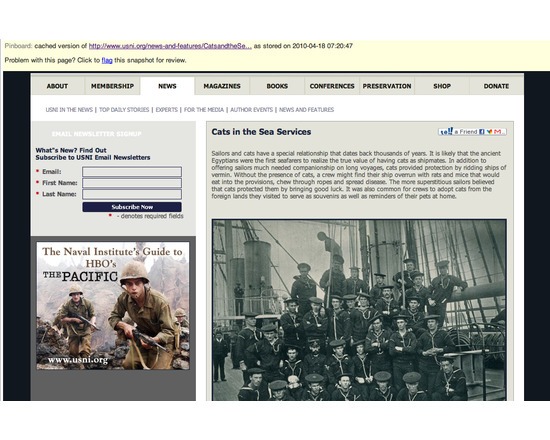
In addition to the basic features, Pinboard offers a bookmark archiving service for an annual fee of $25. The site will crawl and store a copy of every bookmark in your account, and display a special icon you can click to see a cached copy. If the page you bookmarked goes offline, you'll still be able to see the archived copy indefinitely.
Pinboard is a small site that features easy access to customer support and communicating with the developer. He is easy to reach through Twitter, IRC or email,.
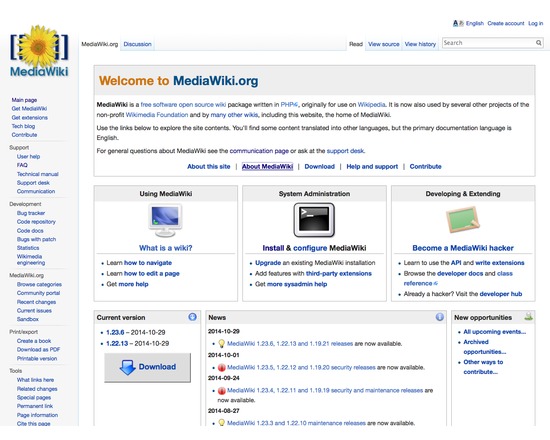
MediaWiki is a free software open source wiki package written in PHP, originally for use on Wikipedia and other Wikimedia Foundation projects. It is designed to be run on a large server farm for a website that gets millions of hits per day.
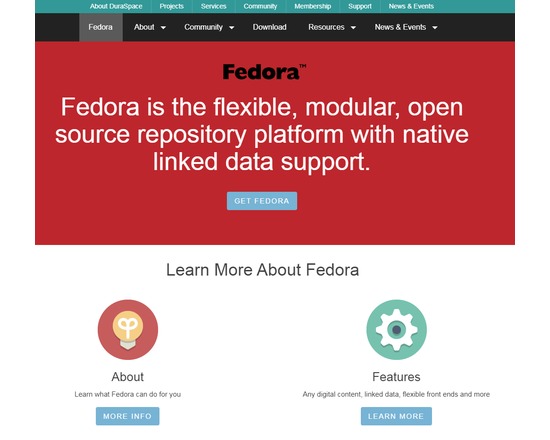
Fedora (Flexible Extensible Digital Object Repository Architecture) was originally developed by researchers at Cornell University as an architecture to store, manage, and access digital content in the form of digital objects. Fedora defines a set of abstractions for expressing digital objects, asserting relationships among digital objects, and linking behaviors to digital objects. Developed by the community and stewarded by Duraspace — a nonprofit involved with open source technology projects including VIVO and DSpace — Fedora Commons implements the Fedora abstractions in an open source, modular repository system for managing and disseminating digital content.
Fedora Commons is widely used in the academic sector as a basis for digital libraries, archives, or repository systems. Its worldwide installed user base includes academic and cultural heritage organizations, universities, research institutions, university libraries, national libraries, government agencies, and more.
Management and maintenance of any digital content type and of metadata about content in any format
Scale to millions of objects
Access data via APIs (REST/SOAP)
Provide RDF search (SPARQL)
Rebuilder utility (for disaster recovery and data migration)
Entire repository can be rebuilt from the digital object and content files
Content model architecture (define "types" of objects by their content)
Many storage options (database and file systems)
JMS messaging (your apps can "listen" to repository events)
Web-based administrator GUI (low-level object editing)
OAI-PMH provider service
GSearch (fulltext) search service
Multiple, customer driven front-ends