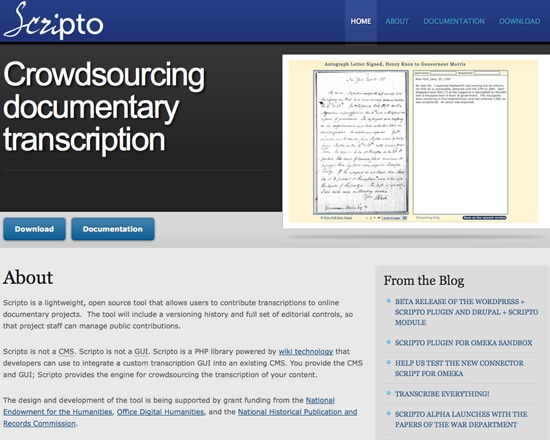
Scripto is a lightweight, open source tool for crowdsourcing transcriptions for Humanities projects. Projects utilizing Scripto can manage contributions via full editorial controls and a versioning history.
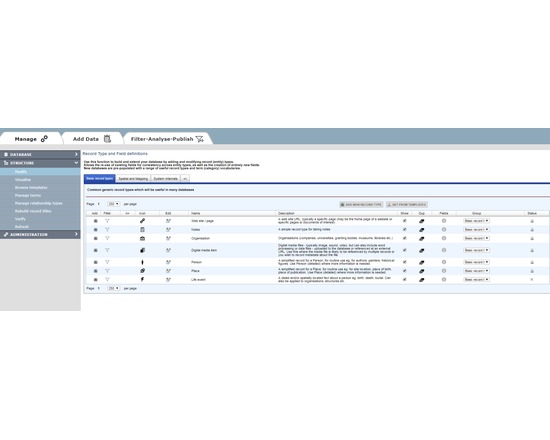
HEURIST (http://HeuristNetwork.org) is an extremely flexible, end-user oriented, web-based data management system designed specifically for Humanities data. Developed since 2005, it has been in active use across many projects since 2009. It is available both as a free web service for researchers (hosted at the University of Sydney Data Centre) or for installation on a physical or virtual server (Open Source on gitHub).
Researchers can design, create, manage, analyse, visualise and publish their own richly-structured database(s) through a simple web interface, without the need for programmer(s). Quite complex databases can be built in a few hours by borrowing structures and vocabularies published by other users. Databases can be designed and built incrementally, as existing data are not affected by changes in structure. Databases created by Heurist are stored in MySQL with a repeatable structure facilitating sustainability and independent access by other software.
Advanced features include record linking, graph structure, drill-down facet searches, rule-based queries, custom reports, linked map-timelines, network visualisation, normalised spreadsheet import, crosstabulation, XML feeds, XSLT transforms. The team provides initial email and skype assistance for project setup at no cost, and special customisations at modest cost.
Heurist is applicable in many domains including History, Archaeology, Anthropology, Cultural Research, Linguistics, Media Studies etc. It handles everything from text, tags and categories, through networks of rich relationships and offset annotations, to images, video, spatial data and dating (including non-western systems and dating uncertainty).
Sophisticated searches (including faceted and rule-based) can be saved, organised and rendered as layered interactive maps, timelines, network visualisations, crosstabulations, lists, custom reports, XML and XSLT transforms, all of which can easily be printed or embedded (live) in a website - Heurist provides the html code required to embed results in a web page or CMS.
Databases can easily be migrated later to a personal or institutional server. Since the data are stored in a standard MySQL database with a fixed and well-documented structure, the data can be accessed directly via SQL from most programming languages independently of Heurist.
Version 4.2 (Jan 2016 onwards) is available as a service via the Heurist website. Version 4 delivers a user-customisable interface of widgets, along with better mapping and visualisation. Existing version 3 databases are bidirectionally compatible with version 4.
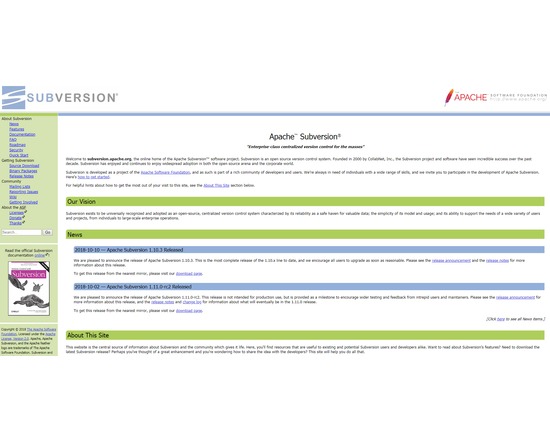
Apache Subversion Version System (SVN) is an open source version control system. Access and revision to objects are carefully controlled, to prevent unauthorized access and alteration. Developers use SVN to maintain current and historical versions of files such as source code, web pages, and documentation.
Their Vision:
Subversion exists to be universally recognized and adopted as an open-source, centralized version control system characterized by its reliability as a safe haven for valuable data; the simplicity of its model and usage; and its ability to support the needs of a wide variety of users and projects, from individuals to large-scale enterprise operations.
Features:
Version support for all files and directories in repository, enabling administrator to track changes that have occurred and obtain earlier versions of files
Renamed/copied/moved/removed files retain full revision history
Free-form versioned metadata
Atomic commits
Merge tracking
File locking
Changelists to organize commits into commit groups
Preservation of file attributes, such as executable and read/write status
Apache network server support with WebDAV/DeltaV protocol
Write-through proxy using WebDAV
Interactive conflict resolution
Repository read-only mirroring
Parsable output, including XML log output
Full MIME support - users can view or change the MIME type of each file, with the software knowing which MIME types can have their differences from previous versions shown
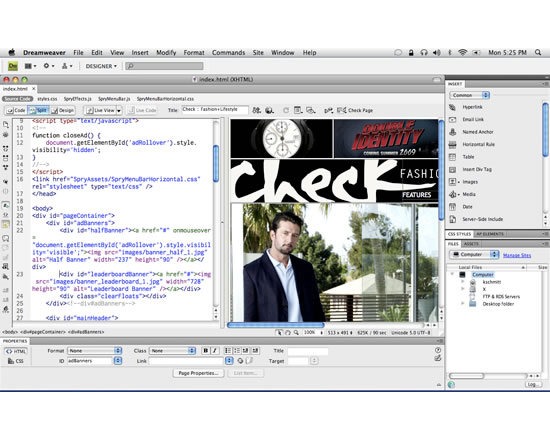
A visual development tool for creating, publishing, and managing websites and mobile content: Dreamweaver offers a graphics-based WYSIWYG (What You See Is What You GET pronounced wizzywig) and code-based user interface for the development of web pages and sites. The tool may be used to simplify the process of web site development (in comparison to creation of individual web pages), through the provision of a templating system that allows single-source update of shared code and layout across entire sites without server-side includes or scripting.
Features:
WYSIWYG
Code hinting for Ajax and JavaScript frameworks
Subversion integration
FTP/SFTP support
WebDav support
Web site template system
Adobe Spry AJAX framework support
Features:
- C, shell scripting (sh), AWK, and sed
- Powerful text processing facilities
- Flexibility and adaptability
-Support for multiple programming paradigms
-Reference counting memory management
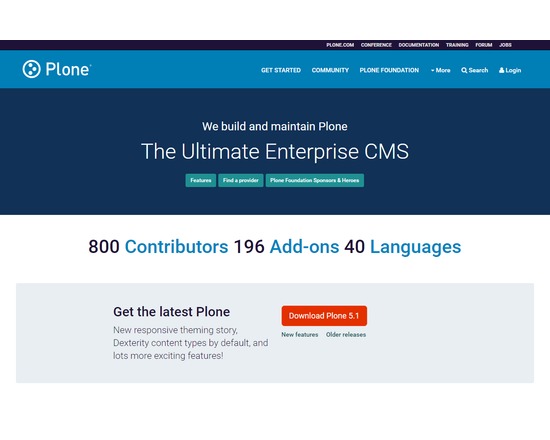
Plone is a powerful, flexible, open source Content Management System (CMS) built on top of Zope application server and CMF.
Features:
- Flexible and adaptable workflow
- Customisable
- Free add-ons
- Versioning, history and reverting content
- Support for multiple mark up formats
- Multilingual content management
- RSS feed support
- WebDAV and FTP support
- WYSIWYG
- Integrates with Active Directory, Salesforce, LDAP, SQL, Web Services, LDAP and Oracle
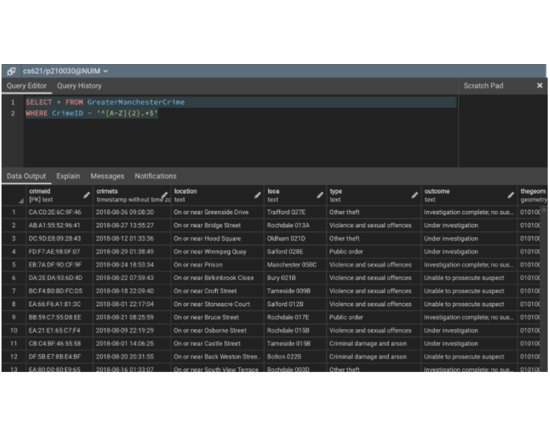
PostgreSQL is a powerful, open source object-relational database system running on all major platforms. It supports native programming interfaces for C/C++, Java, .Net, Perl, Python, Ruby, Tcl and ODBC among others.
Features:fully ACID compliant
full support for foreign keys, joins, views, triggers, and stored procedures (in multiple languages)
includes most SQL 2008 data types, including INTEGER, NUMERIC, BOOLEAN, CHAR, VARCHAR, DATE, INTERVAL, and TIMESTAMP
supports storage of binary large objects, including pictures, sounds, or video
multi-Version Concurrency Control (MVCC)
Highly customisable
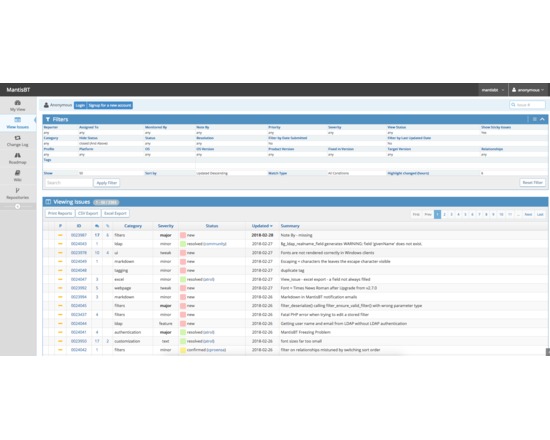
MantisBT is a free popular web-based bugtracking system written in the PHP scripting language. The most common use of MantisBT is to track software defects. However, MantisBT is often configured by users to serve as a more generic issue tracking system and project management tool.
Features:
event-driven-plug-in system
works with MySQL, MS SQL, PostgreSQL, SQLite, Oracle and IBM DB2 databases
RSS Feeds
Customisable workflow
Wiki integration
Chat integration
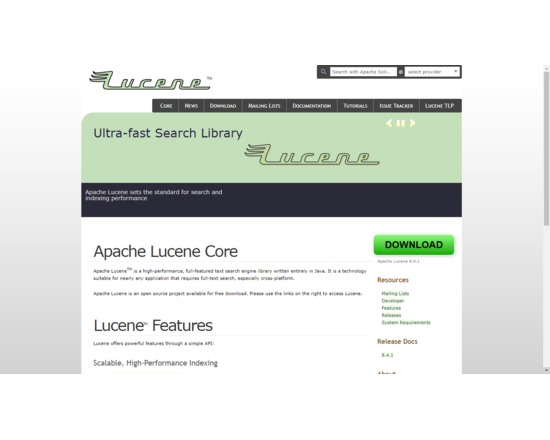
Apache Lucene is a Java-based high-performance text search engine library. Lucene Core is a Java library providing powerful indexing and search features, as well as spellchecking, hit highlighting and advanced analysis/tokenization capabilities.
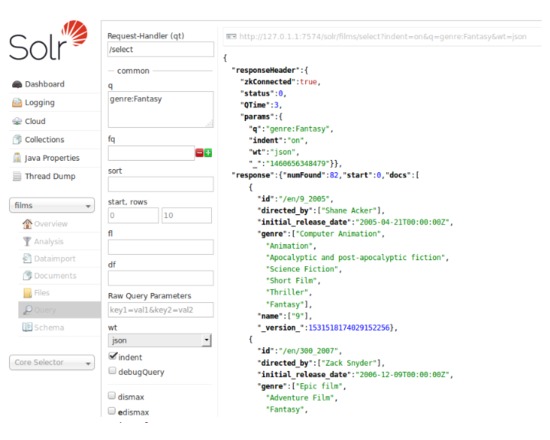
Solr is an open source enterprise search platform from the Apache Lucene project. It operates as a standalone full-text search server within an appropriate servlet container, such as Tomcat. Solr uses the Lucene Java search library at its core for full-text indexing and search, and has REST-like HTTP/XML and JSON APIs that make it easy to use from virtually any programming language.