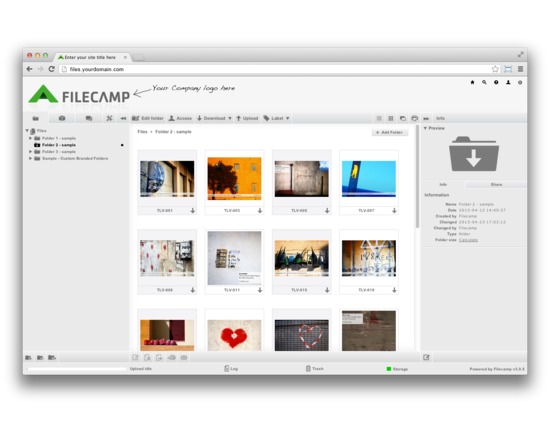
Online Digital Asset Management (DAM) and collaboration platform for business use. Offers user management, custom branding and password-protected folders. Digital Asset Management, Secure File Sharing, Media Library, Online Proofing and so much more …
Upload, manage and share your files from one good looking, easy-to-use spot in the cloud.
Fedora (Flexible Extensible Digital Object Repository Architecture) was originally developed by researchers at Cornell University as an architecture to store, manage, and access digital content in the form of digital objects. Fedora defines a set of abstractions for expressing digital objects, asserting relationships among digital objects, and linking behaviors to digital objects. Developed by the community and stewarded by Duraspace — a nonprofit involved with open source technology projects including VIVO and DSpace — Fedora Commons implements the Fedora abstractions in an open source, modular repository system for managing and disseminating digital content.
Fedora Commons is widely used in the academic sector as a basis for digital libraries, archives, or repository systems. Its worldwide installed user base includes academic and cultural heritage organizations, universities, research institutions, university libraries, national libraries, government agencies, and more.
Management and maintenance of any digital content type and of metadata about content in any format
Scale to millions of objects
Access data via APIs (REST/SOAP)
Provide RDF search (SPARQL)
Rebuilder utility (for disaster recovery and data migration)
Entire repository can be rebuilt from the digital object and content files
Content model architecture (define "types" of objects by their content)
Many storage options (database and file systems)
JMS messaging (your apps can "listen" to repository events)
Web-based administrator GUI (low-level object editing)
OAI-PMH provider service
GSearch (fulltext) search service
Multiple, customer driven front-ends
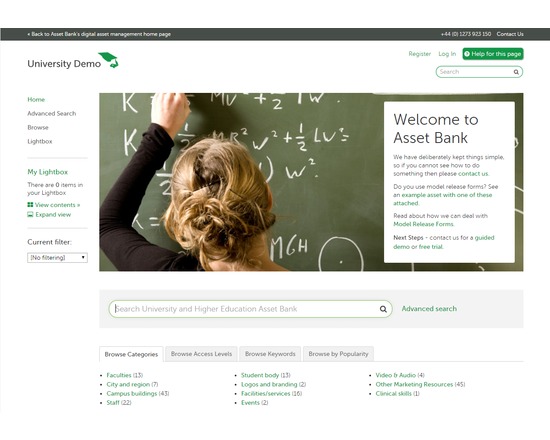
A digital asset management system for the storage, management and delivery of raster images, audiovisual content, documents and other digital asset types. The software provides limited eCommerce functionality for use by institutions that wish to use the system to sell digital products. It may be installed in-house on a Windows/Linux/Unix system or hosted on a system operated by the developers.
Asset storage can be customized to suit the needs of your project on server hard disk, network or SAN, cloud storage via Amazon or Rackspace, via Box accounts, or stored as BLOBs in your database.
Pricing quotes are available through the product website. Asset Bank offers active customer support including guided demos, customized quotes, monthly webinars, a knowledge base, in depth documentation, and a support ticket system. This resource is ideal for large Enterprises and supports multi-lingual configuration, organisational units, and LDAP integration.
Features:
Image versioning
User-driven rating system
Automatic generation of thumbnails and preview images
Rapid downloading of files in a range of formats
Search or browse by keywords and popularity
Monitor & control asset usage
Brand guidelines to provide consistent access to project/organization logos, colours, etc
Metadata batch edit
Date validation
Metadata import in XML or other delimited formats
configure and customize almost all aspects of the interface
Premium Features:
Document Editor Plug-in for desktop applications used to edit common file types (.doc, Photoshop & InDesign file formats)
Video Keywording module allows you to link keyword metadata to points of time in a video asset
Presentation Builder module maintains project presentation slides in Asset Bank, creates master presentation sets including slides that can be shared and reused
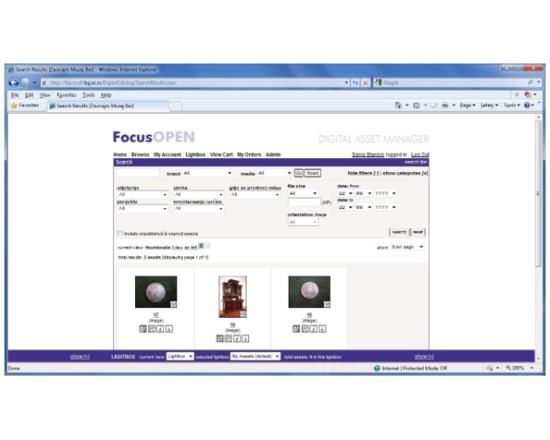
Windows .NET based open source Digital Asset Management solution designed for management tasks and decisions surrounding the ingestion, annotation, cataloguing, storage, retrieval and distribution of digital assets