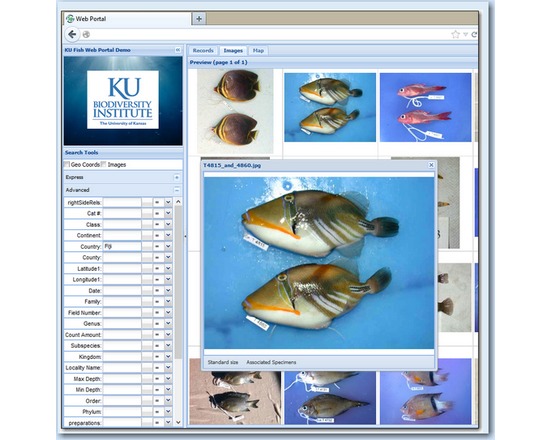
Specify is a database platform for museum and herbarium research data. It manages species and specimen information for computerizing biological collections, tracking museum specimen transactions, linking images to specimen records and publishing catalog data to the Internet. Specify is written in Java for Windows, Mac OS X, and Linux computers and uses the relational data manager, MySQL, as its data engine. Specify, Java, and MySQL are free and open-source.
Specify supports data from specimens, taxonomic and stratigraphic classifications, field notebooks, DNA sequence runs, literature references, as well as from other primary sources. It also manages the information associated with repository agreements, accessions, conservation treatments, collection object containers, images, and document attachments.
Data fields in Specify’s form windows can be selected, organized, re-named, and re-sized to suit your curatorial preferences and to eliminate the need for tabbing through multiple data forms. Specify’s “tree” data windows for taxonomy, geography, storage location, chronostratigraphy and lithostratigraphy provide intuitive access to hierarchical data for editing, drag-and-drop synonymization, re-parenting, and for discovering linked collection objects.
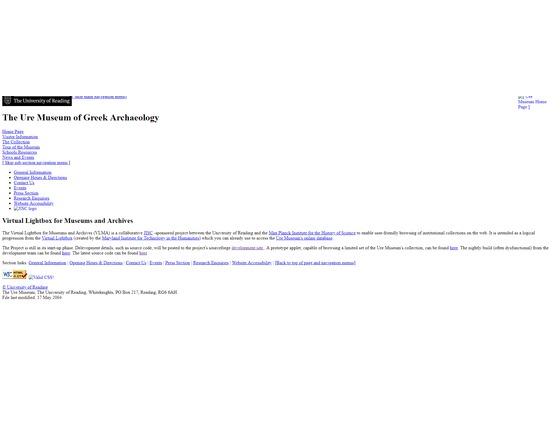
"The Virtual Lightbox for Museums and Archives (VLMA) is an educational tool for collecting and reusing in a structured fashion the online contents of museums and archives with visual components. With VLMA, you can browse and search collections, construct personal collections, export these collections to xml or Impress presentation format, annotate them, and share your collections with other VLMA users."
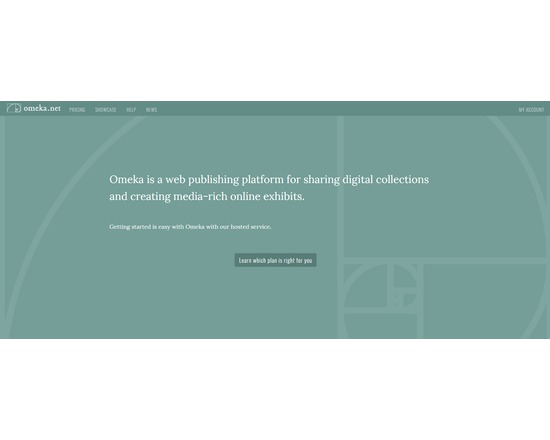
Omeka.net provides a web-publishing platform to curate collections and create exhibitions of digitized content. Omeka.net has grown out of the Omeka project. Omeka.net provides some of the same functionality as Omeka, but does not require the user to provide hosting or to maintain their installation in any way. However, use of Omeka.net limits customization, and hosting more than 500MB of content requires a paid account.
Objects in the collection can be cataloged with Dublin core metadata fields and georeferenced for display on a map. Omeka.net includes several plugins, including COinS (which makes objects in Omeka accessible to citations management software, like Zotero), HTML5 Media (to play audio and video), and Library of Congress Suggest (which will auto-populate fields with LoC authority and subject headings).
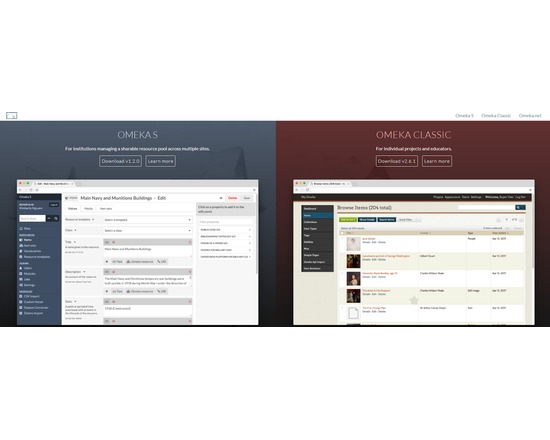
Omeka is a content management system designed for the display of library, museum, archives, and scholarly collections and exhibitions.
Omeka falls at a crossroads of Web Content Management, Collections Management, and Archival Digital Collections Systems. Omeka is designed with non-IT specialists in mind, allowing users to focus on content and interpretation rather than programming. It brings Web 2.0 technologies and approaches to academic and cultural websites to foster user interaction and participation. It makes top-shelf design easy with a simple and flexible templating system. Its robust open-source developer and user communities underwrite Omeka’s stability and sustainability.
Omeka allows users to publish cultural heritage objects, extend its functionality with themes and plugins, and curate online exhibits with digital objects.