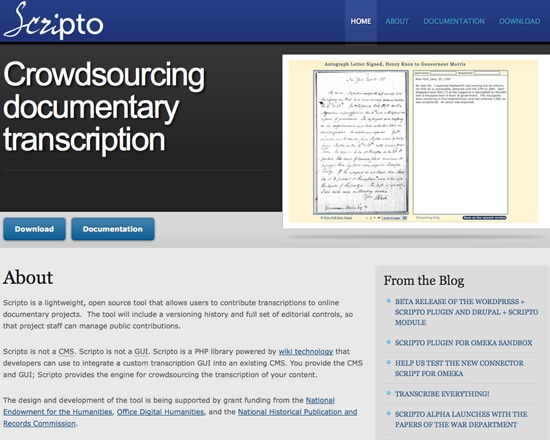
Scripto is a lightweight, open source tool for crowdsourcing transcriptions for Humanities projects. Projects utilizing Scripto can manage contributions via full editorial controls and a versioning history.
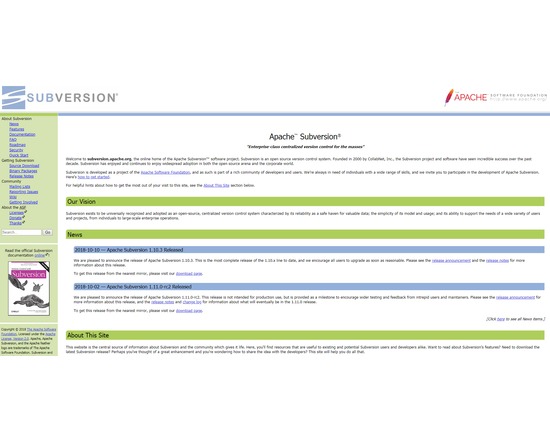
Apache Subversion Version System (SVN) is an open source version control system. Access and revision to objects are carefully controlled, to prevent unauthorized access and alteration. Developers use SVN to maintain current and historical versions of files such as source code, web pages, and documentation.
Their Vision:
Subversion exists to be universally recognized and adopted as an open-source, centralized version control system characterized by its reliability as a safe haven for valuable data; the simplicity of its model and usage; and its ability to support the needs of a wide variety of users and projects, from individuals to large-scale enterprise operations.
Features:
Version support for all files and directories in repository, enabling administrator to track changes that have occurred and obtain earlier versions of files
Renamed/copied/moved/removed files retain full revision history
Free-form versioned metadata
Atomic commits
Merge tracking
File locking
Changelists to organize commits into commit groups
Preservation of file attributes, such as executable and read/write status
Apache network server support with WebDAV/DeltaV protocol
Write-through proxy using WebDAV
Interactive conflict resolution
Repository read-only mirroring
Parsable output, including XML log output
Full MIME support - users can view or change the MIME type of each file, with the software knowing which MIME types can have their differences from previous versions shown
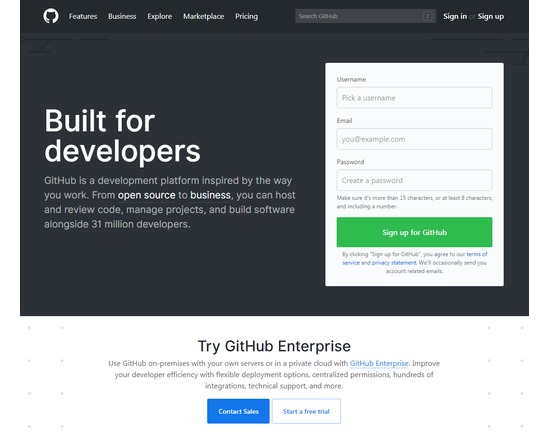
GitHub is a web-based repository service which offers the distributed revision control and source code management (SCM) functionality of GIT with a graphical user interface, desktop, and mobile integration. It also provides collaboration tools such as access control, wikis, task management, code review, bug tracking, and feature requests. It offers free accounts, often used to host opensource software projects, and private (paid) repositories.
Projects on GitHub can be accessed and manipulated using the git command-line interface and all of the standard git commands work with it. GitHub also allows registered and non-registered users to browse public repositories on the site. Multiple desktop clients have also been created by GitHub and other third parties which integrate with the platform.
GitHub is mainly used for code but can also be used for non-code files, it supports the following formats and features:
3D render files
Photoshop's native PSD format can be previewed and compared to previous versions of the same file.
Nested task-lists
Documentation and wikis
Small websites can be hosted from public repositories on GitHub. The URL format is http://projectname.github.io.
Issue tracking (including feature requests)
Visualization of geospatial data
Gantt charts
GitHub is a heavily used in the opensource development community but does not require hosted projects to meet the definition of Open Source.
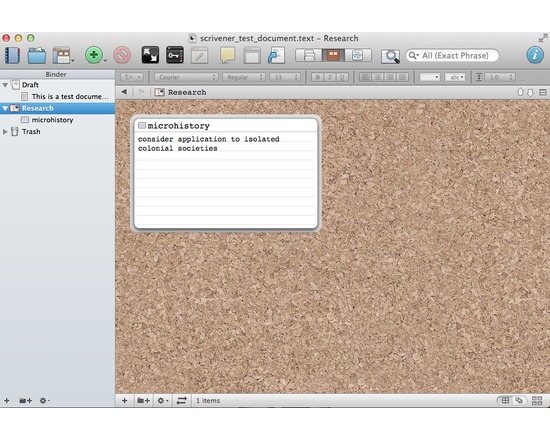
Scrivener is software for writing that includes virtual index cards, outlining, version control, import/export options, and scriptwriting features, and provides a management system for notes and documents plus support for document metadata.
It allows the creation of documents from sub documents, ebook (epub and Kindle/mobi) and TeX and LaTeX export as well as ODF, PDF and Microsoft Word exports.
A Linux version is in beta, and an iOS version is reportedly under development