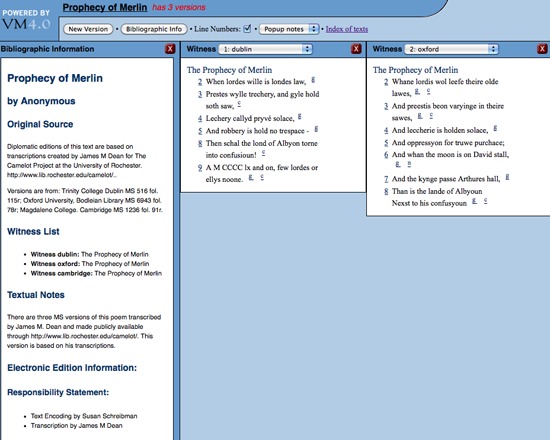
The Versioning Machine, now in version 4.0, is a framework and an interface for displaying multiple versions of text, and encodes the text according to TEI guidelines. It incorporates features found in both critical editions and electronic publication, in addition to providing an environment for textual editors to comparatively view the results of their edits. This tool may be downloaded for use on a local machine, or hosted on one's server for web usage.
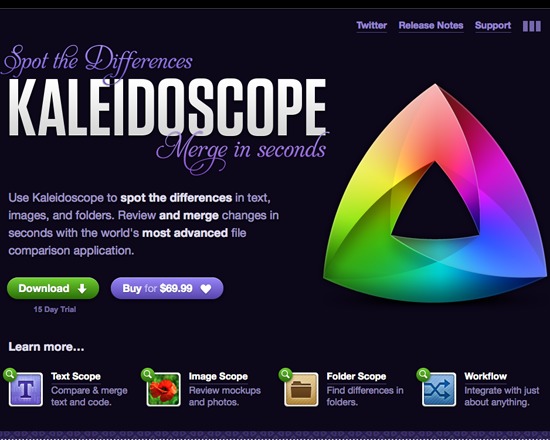
Kaleidoscope is a tool designed to assist users in spotting differences between versions of a text, source files or images. It allows direct comparison of images, texts to be merged into a single edition, and files to be differentiated.
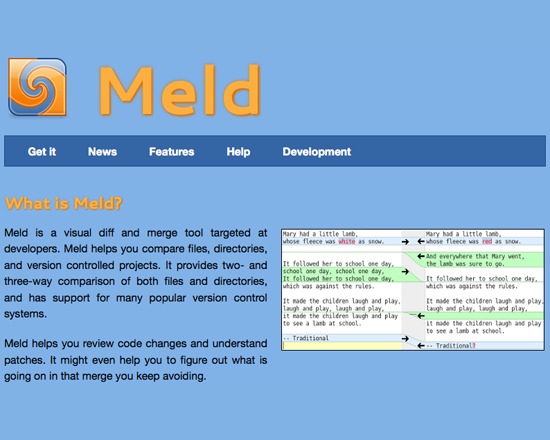
Meld is a free, open source tool for comparing files, directories and version-controlled projects developed in Python by Kai Willadsen. It features two- and three-way comparison of files and directories, supports numerous version control systems, and is particularly useful for reviewing changes to code. This tool can be downloaded or run without an install via the command line by copying the source code directly from the repository.
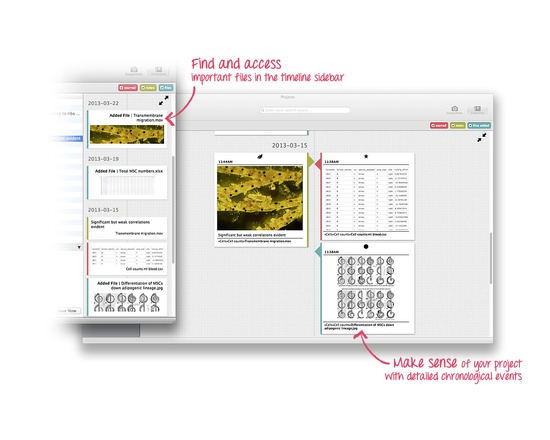
Projects allows researchers to organise and manage all their research outputs in a safe, simple and structured way. It’s designed to help academics, at any stage of their career, keep track and stay on top of all their results. It’s a light, useful and slick application that integrates into a researcher’s existing workflow to help them work more efficiently and ensure they have more time for making discoveries.
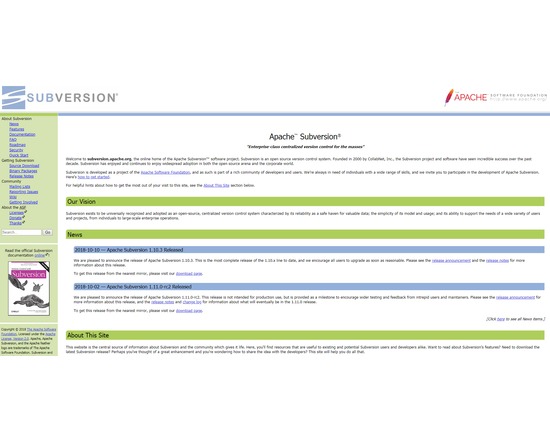
Apache Subversion Version System (SVN) is an open source version control system. Access and revision to objects are carefully controlled, to prevent unauthorized access and alteration. Developers use SVN to maintain current and historical versions of files such as source code, web pages, and documentation.
Their Vision:
Subversion exists to be universally recognized and adopted as an open-source, centralized version control system characterized by its reliability as a safe haven for valuable data; the simplicity of its model and usage; and its ability to support the needs of a wide variety of users and projects, from individuals to large-scale enterprise operations.
Features:
Version support for all files and directories in repository, enabling administrator to track changes that have occurred and obtain earlier versions of files
Renamed/copied/moved/removed files retain full revision history
Free-form versioned metadata
Atomic commits
Merge tracking
File locking
Changelists to organize commits into commit groups
Preservation of file attributes, such as executable and read/write status
Apache network server support with WebDAV/DeltaV protocol
Write-through proxy using WebDAV
Interactive conflict resolution
Repository read-only mirroring
Parsable output, including XML log output
Full MIME support - users can view or change the MIME type of each file, with the software knowing which MIME types can have their differences from previous versions shown