Skip to content
TAPoR Text Analysis Portal for Research

Tools

Sort by Name Rating Date ↓

Search

TWINT - Twitter Intelligence Tool

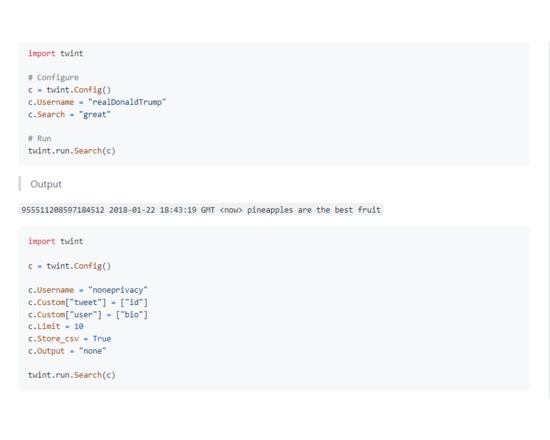
Twint is an advanced Twitter scraping tool written in Python that allows for scraping Tweets from Twitter profiles without using Twitter's API. Twint utilizes Twitter's search operators to let you scrape Tweets from specific users, scrape Tweets relating to certain topics, hashtags & trends, or sort out sensitive information from Tweets like e-mail and phone numbers. I find this very useful, and you can get really creative with it too. Twint also makes special queries to Twitter allowing you to also scrape a Twitter user's followers, Tweets a user has liked, and who they follow without any authentication, API, Selenium, or browser emulation. Recently it looks like Twitter has found a way to limit the number of tweets scraped using twint. Twint also has a visualizer and a desktop app is under development.
Rated 0.0 out of 5.

Analysis

All Our Ideas

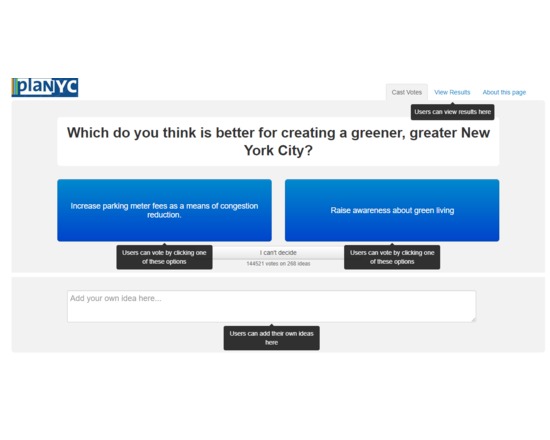
All Our Ideas is a research project that seeks to develop a new form of social data collection by combining the best features of quantitative and qualitative methods. Using the power of the web, we are creating a data collection tool that has the scale, speed, and quantification of a survey while still allowing for new information to "bubble up" from respondents as happens in interviews, participant observation, and focus groups.

Rated 0.0 out of 5.

Publishing

Odyssey

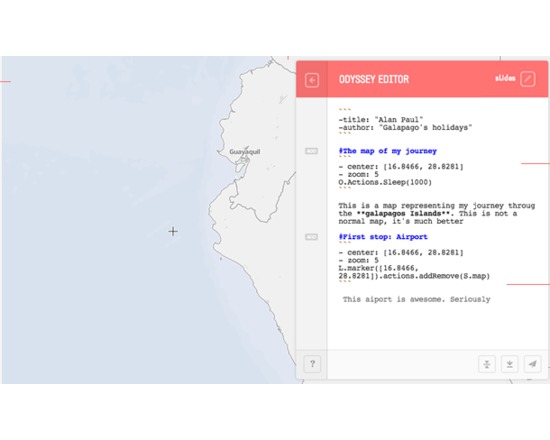
Odyssey.js is an open-source tool that allows you to combine maps, narratives, and other multimedia into a beautiful story. You enhance the narrative and multimedia of your stories using Actions (e.g. map movements, video and sound control, or the display or new content) that will let you tell your story in an exciting new way. Experts can also add custom Templates and Actions by following the contribution guide. The tool is still under development and will include YouTube, Vimeo, Soundcloud, and Twitter based Actions. The library is open source and freely available to use in your projects.

Rated 0.0 out of 5.

Visualization

Sonic Visualiser

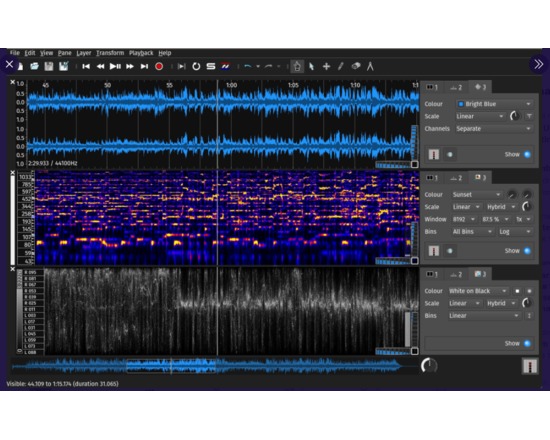
Sonic Visualiser is a free, open-source application for Windows, Linux, and Mac, designed to study a music recording closely. It's designed for musicologists, archivists, signal-processing researchers, and anyone else looking for a friendly way to look at what lies inside the audio file. Its latest release was September 2021. Its main functions are visualisation, analysis, and annotation of music audio recordings.

Rated 0.0 out of 5.

Visualization

Praat

Praat is a free software package for phonetic analysis. Some of the functionalities include spectral analysis (spectrograms) pitch analysis, formant analysis, intensity analysis, jitter, shimmer, voice breaks cochleagram, excitation pattern, speech manipulation, etc

Rated 0.0 out of 5.

Natural Language Processing

Nocode app

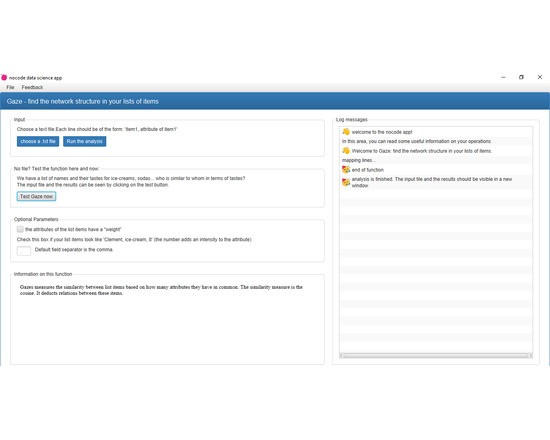
The Nocode app is a suite of data exploration tools (or functions) that can be used by analysts, students, researchers and journalist to analyse text. It currently has 5 functions: Umigon: sentiment analysis for social media, in English and French. Cowo: transform your texts into networks. Topics: identify the key topics in texts of any language. Gaze: find the network structure in your list of items. Organic: distinguish natural from corporate tweets. It is free to use. It can be used on a browser and the app can be downloaded and installed on a local computer.

Rated 0.0 out of 5.

Natural Language Processing

TreeTagger

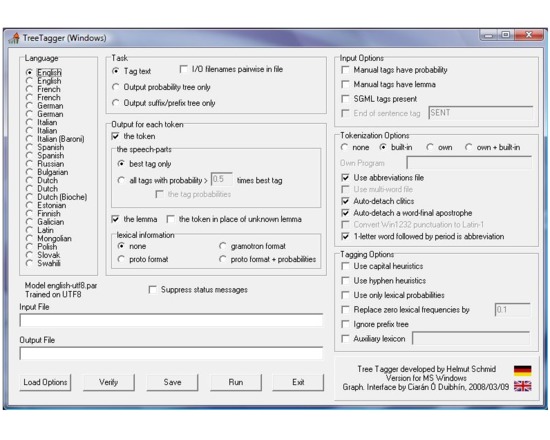
The TreeTagger is a program developed by Helmut Schmid at the University of Stuttgart (now at the University of München), for part-of-speech tagging and lemmatization. Language models (known as “parameters”, file extension .par) are supplied on the TreeTagger webpage for using the program with texts in English, French, German, Italian, Spanish, Russian, Bulgarian, Dutch, Estonian, Finnish, Galician, Latin, Mongolian, Polish, Slovak and Swahili, and models for some other languages are available from sites linked to the TreeTagger webpage. For a language for which no model exists, it is necessary to hand-tag some text, and then run a training program (provided with the TreeTagger) to create the model.

Rated 0.0 out of 5.

Search

KonText

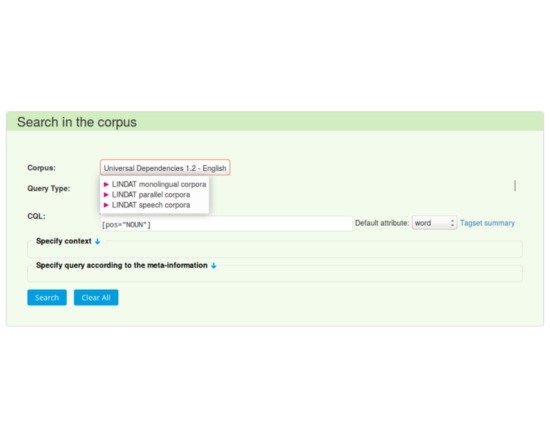
KonText is a basic web application for querying corpora available within the LINDAT/CLARIAH-CZ project. It allows evaluation of simple and complex queries, displaying their results as concordance lines, computing frequency distribution, calculating association measures for collocations and further work with language data.

Rated 0.0 out of 5.

Search

Sketch Engine

Sketch Engine is a tool to explore how language works. Its algorithms analyze authentic texts of billions of words (text corpora) to identify instantly what is typical in language and what is rare, unusual or emerging usage. It is also designed for text analysis or text mining applications. Sketch Engine is used by linguists, lexicographers, translators, students and teachers. It is a first choice solution for publishers, universities, translation agencies and national language institutes throughout the world. Sketch Engine contains 500 ready-to-use corpora in 90+ languages, each having a size of up to 30 billion words to provide a truly representative sample of language. Some of its functions are: word sketch, sketch difference, thesaurus, concordance, parallel concordance, wordlist, n-grams, keywords & terms, bilingual term extractiontrends and OneClick Dictionary.

Rated 0.0 out of 5.

Visualization

Alteryx

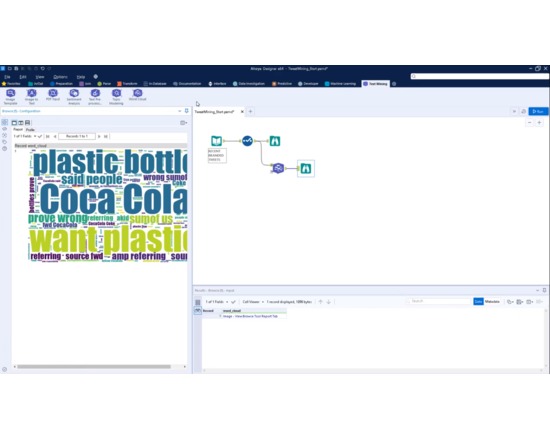
Alteryx is an online commercial data analysis service. Among its capabilities are optical character recognition, sentiment analysis, and topic modeling with Text Mining. You can quickly build predictive models without coding through its intuitive graphical user interface. It has many visualisation options among which is the word cloud.

Rated 0.0 out of 5.