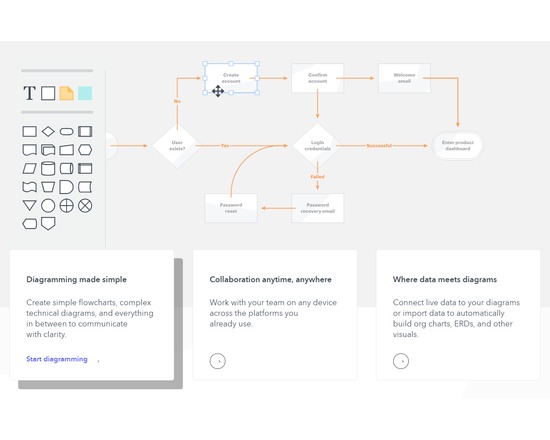
Lucidchart is an online diagram tool that enables users to easily visualize complex information through flow charts, mind maps and other diagram types. Multiple users can work together simultaneously to edit a document. Lucidchart integrates with many platforms including Google Apps/Drive, Confluence, JIRA, Slack, ec. Free accounts are provided for educational use.
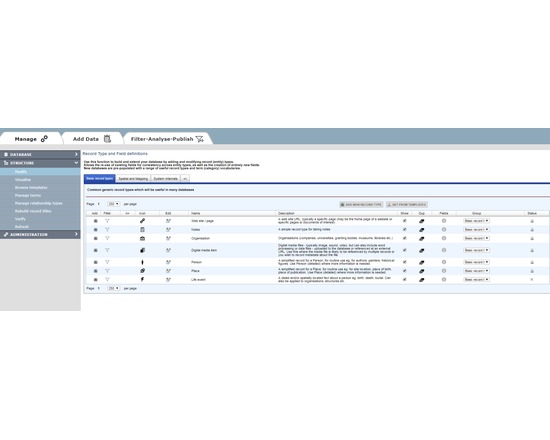
HEURIST (http://HeuristNetwork.org) is an extremely flexible, end-user oriented, web-based data management system designed specifically for Humanities data. Developed since 2005, it has been in active use across many projects since 2009. It is available both as a free web service for researchers (hosted at the University of Sydney Data Centre) or for installation on a physical or virtual server (Open Source on gitHub).
Researchers can design, create, manage, analyse, visualise and publish their own richly-structured database(s) through a simple web interface, without the need for programmer(s). Quite complex databases can be built in a few hours by borrowing structures and vocabularies published by other users. Databases can be designed and built incrementally, as existing data are not affected by changes in structure. Databases created by Heurist are stored in MySQL with a repeatable structure facilitating sustainability and independent access by other software.
Advanced features include record linking, graph structure, drill-down facet searches, rule-based queries, custom reports, linked map-timelines, network visualisation, normalised spreadsheet import, crosstabulation, XML feeds, XSLT transforms. The team provides initial email and skype assistance for project setup at no cost, and special customisations at modest cost.
Heurist is applicable in many domains including History, Archaeology, Anthropology, Cultural Research, Linguistics, Media Studies etc. It handles everything from text, tags and categories, through networks of rich relationships and offset annotations, to images, video, spatial data and dating (including non-western systems and dating uncertainty).
Sophisticated searches (including faceted and rule-based) can be saved, organised and rendered as layered interactive maps, timelines, network visualisations, crosstabulations, lists, custom reports, XML and XSLT transforms, all of which can easily be printed or embedded (live) in a website - Heurist provides the html code required to embed results in a web page or CMS.
Databases can easily be migrated later to a personal or institutional server. Since the data are stored in a standard MySQL database with a fixed and well-documented structure, the data can be accessed directly via SQL from most programming languages independently of Heurist.
Version 4.2 (Jan 2016 onwards) is available as a service via the Heurist website. Version 4 delivers a user-customisable interface of widgets, along with better mapping and visualisation. Existing version 3 databases are bidirectionally compatible with version 4.
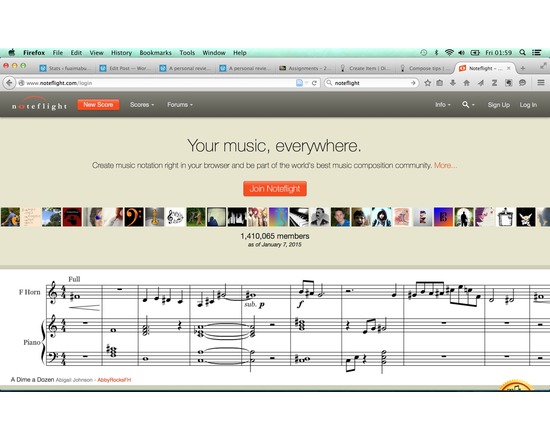
Noteflight is a flash-based web product for the creating and sharing of musical text online. As well as the musical text processor, which is much like full software programs such as Sibelius and Finale, Noteflight has a dynamic social element where you can share original compositions with others and invite them to suggest or edit the work. It is ideal for online collaboration in music and for teaching purposes. A brief review of Noteflight, carried out as part of the MA DAH course at UCC, can be found at
a href=https://fuaimabu.wordpress.com/2015/01/30/a-personal-review-of-noteflight/
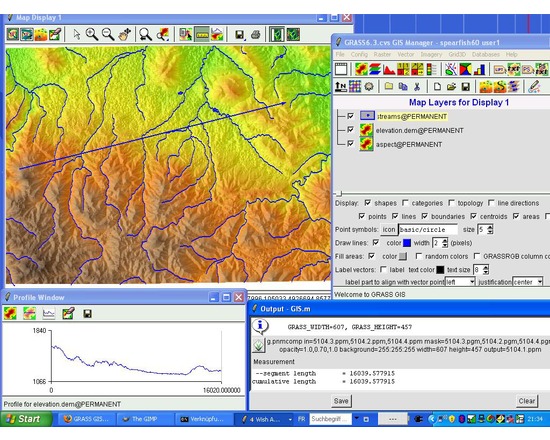
GRASS GIS is free and open source software used for geospatial data management and analysis, image processing, graphics/maps production, spatial modeling, and visualization. GRASS is currently used in academic and commercial settings around the world, as well as by many governmental agencies and environmental consulting companies.
Comparison to QGIS: Like GRASS, QGIS is free, open source, developed by volunteers, and has a robust and active online user community. However, GRASS is mainly used for highly technical purposes and mathematical analyses. For more details, see this Stack Exchange thread. QGIS and GRASS do cooperate with each other; Plug-ins and extensions allow GRASS functions to be used inside QGIS.
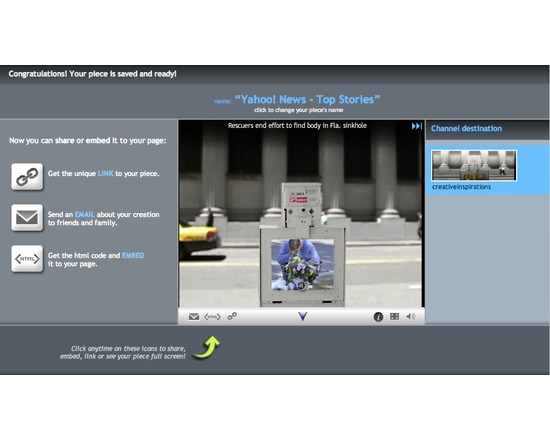
VUVOX ("visual voice") was an easy to use production and sharing service that allowed you to instantly create and share stories. You could create, mix, and personalize media - videos, photos and music - to share with others.
More information is available at https://sites.google.com/site/glogsterandvuvox/home/vuvoxIt was acquired by ebay in 2008.
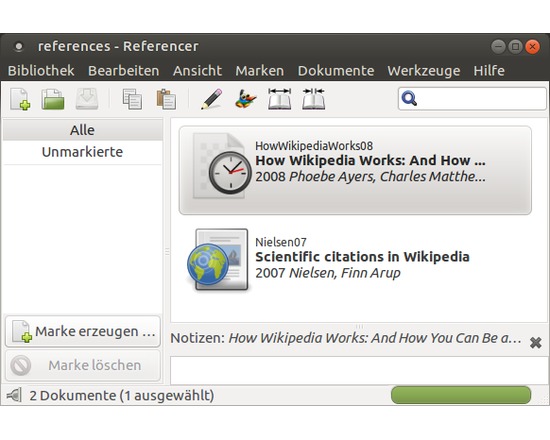
Referencer is a Gnome application to organize documents or references. You can also generate a BibTeX bibliography file. Referencer is able to automatically acquire bibliographic information (metadata) for some kinds of documents once the file (usually PDF) is added to the library.
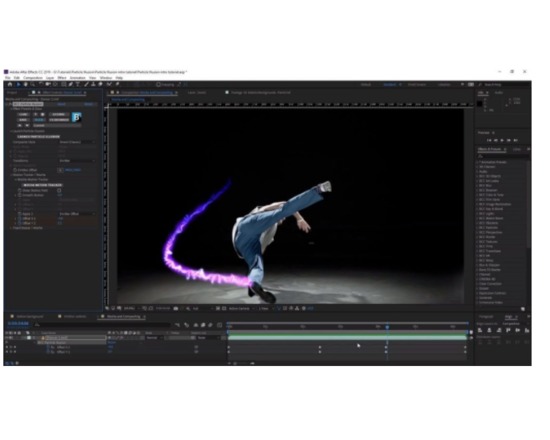
After Effects is a digital motion graphics and compositing software. After Effects allows users to animate, alter, and composite media in 2d and 3d space with various built-in tools and third party plug-ins, as well as individual attention to variables like parallax and user-adjustable angle of observation. The latest version, CS5.5, is the twentieth generation in the product line.
Features:
Tightly integrated with other Adobe suite software
Searchable timelines and projects
Independent keyframing of x, y, z values
Cartoon effect
layer-oriented
Animate and composite flexibly in 2D and 3D
Create and animate text and vector graphics
Choose among extensive visual effects
Fluidly key, mask, rotoscope, and paint composites
Take control of motion and keyframes
Automate with scripting
Work with 32-bit audio
Gain professional results for every media type
Paint and clone with nondestructive vector brushes
Save time with efficient tools and a customizable interface
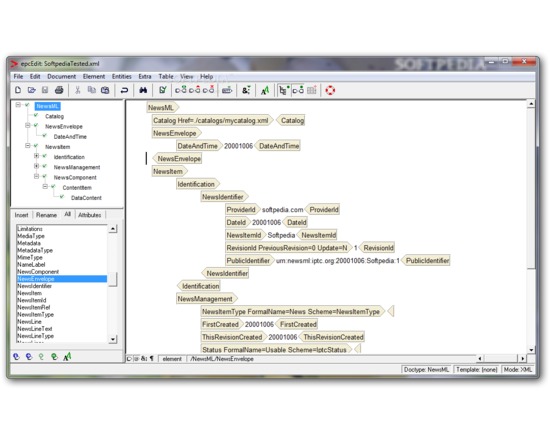
A structured text editor that may be used to create, edit, validate and convert XML and SGML documents. EpcEdit contains an integrated validating parser, an editor for CALS and HTML tables, an attribute editor and an element manipulation tool.
Features:
XML/SGML parser with full support of Oasis SGML-Open catalog files
Document structure mapping, enabling users to visualise the construction of an XML/SGML document without a DTD
Attribute editor that supports conformance checking of attribute values and has special support for ID and IDREF attributes
Configurable user interface that may be integrated with other tools through use of Tcl programming language
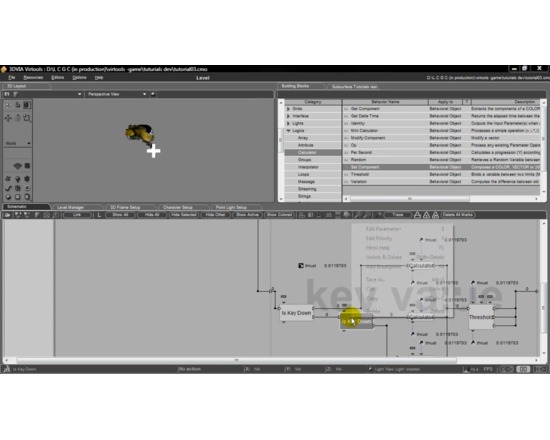
A software tool for the creation of 3D interactive environments. It may be used to model and interact with physical objects that currently or have previously existed in the real world, or create virtual environments that have not previously encountered. VirTool player software is available for Microsoft Windows, Apple MacOS X, Nintendo Wii and Microsoft Xbox 360.
It now exists today more as a commercial tool for business to include 3D experiences in various aspects of their activities.
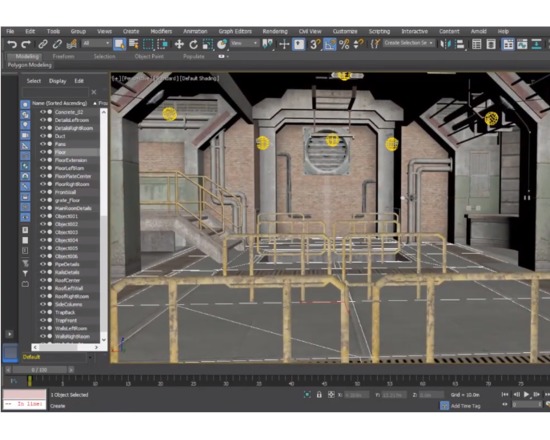
Autodesk 3ds Max (formerly 3D Studio MAX) is an open source graphics software tool used by video game developers, motion picture studios and architectural visualisers for modelling and animation projects. One of the most advanced 3D modelling tools in the industry, 3ds Max has been utilised by many CGI-animated films such as Avatar and 2012 to generate computer graphics alongside live acting.
Features:
Create parametric and organic objects with polygonal and freeform tools
Character Studio enables life-like virtual character animation
Scene Explorer provides hierarchical views of complex scene data and analysis
Wide range of creative textures, planar mapping and layering options
MAXScript built-in scripting language automates repetitive tasks and assists with new tool and interface development
Multiple user collaborations
Customisable and intutive user interface