Skip to content
TAPoR Text Analysis Portal for Research

Tools

Sort by Name Rating ↓ Date

Visualization

Heurist Data Manager / Visualiser / Publisher

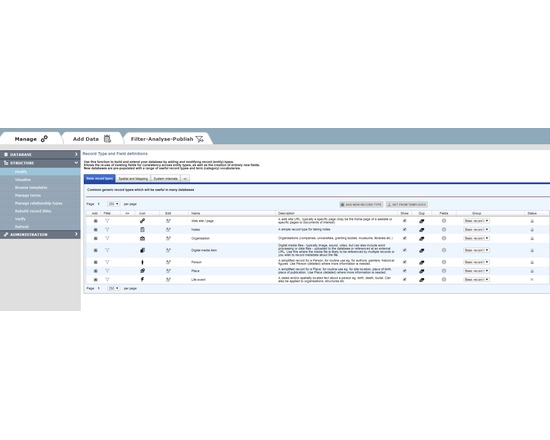
HEURIST (http://HeuristNetwork.org) is an extremely flexible, end-user oriented, web-based data management system designed specifically for Humanities data. Developed since 2005, it has been in active use across many projects since 2009. It is available both as a free web service for researchers (hosted at the University of Sydney Data Centre) or for installation on a physical or virtual server (Open Source on gitHub). Researchers can design, create, manage, analyse, visualise and publish their own richly-structured database(s) through a simple web interface, without the need for programmer(s). Quite complex databases can be built in a few hours by borrowing structures and vocabularies published by other users. Databases can be designed and built incrementally, as existing data are not affected by changes in structure. Databases created by Heurist are stored in MySQL with a repeatable structure facilitating sustainability and independent access by other software. Advanced features include record linking, graph structure, drill-down facet searches, rule-based queries, custom reports, linked map-timelines, network visualisation, normalised spreadsheet import, crosstabulation, XML feeds, XSLT transforms. The team provides initial email and skype assistance for project setup at no cost, and special customisations at modest cost. Heurist is applicable in many domains including History, Archaeology, Anthropology, Cultural Research, Linguistics, Media Studies etc. It handles everything from text, tags and categories, through networks of rich relationships and offset annotations, to images, video, spatial data and dating (including non-western systems and dating uncertainty). Sophisticated searches (including faceted and rule-based) can be saved, organised and rendered as layered interactive maps, timelines, network visualisations, crosstabulations, lists, custom reports, XML and XSLT transforms, all of which can easily be printed or embedded (live) in a website - Heurist provides the html code required to embed results in a web page or CMS. Databases can easily be migrated later to a personal or institutional server. Since the data are stored in a standard MySQL database with a fixed and well-documented structure, the data can be accessed directly via SQL from most programming languages independently of Heurist. Version 4.2 (Jan 2016 onwards) is available as a service via the Heurist website. Version 4 delivers a user-customisable interface of widgets, along with better mapping and visualisation. Existing version 3 databases are bidirectionally compatible with version 4.


Rated 5.0 out of 5.

Search

eXist-db

eXist-db is an open source database management system that stores XML data according to the XML data model and features efficient, index-based XQuery processing.

Rated 5.0 out of 5.

Search

TextGrid

TextGrid is a virtual research environment for text-based humanities scholarship. It offers a variety of tools and services for collaboratively creating, analyzing, editing and publishing texts. The TextGrid environment is split into two components, the Laboratory housing the tools and services, and the Repository for preserving reserach data and making it available to other scholars.

Rated 4.0 out of 5.

Collaboration

Github

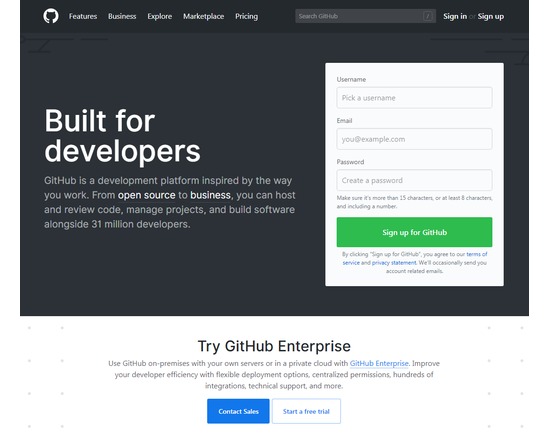
GitHub is a web-based repository service which offers the distributed revision control and source code management (SCM) functionality of GIT with a graphical user interface, desktop, and mobile integration. It also provides collaboration tools such as access control, wikis, task management, code review, bug tracking, and feature requests. It offers free accounts, often used to host opensource software projects, and private (paid) repositories. Projects on GitHub can be accessed and manipulated using the git command-line interface and all of the standard git commands work with it. GitHub also allows registered and non-registered users to browse public repositories on the site. Multiple desktop clients have also been created by GitHub and other third parties which integrate with the platform. GitHub is mainly used for code but can also be used for non-code files, it supports the following formats and features: 3D render files Photoshop's native PSD format can be previewed and compared to previous versions of the same file. Nested task-lists Documentation and wikis Small websites can be hosted from public repositories on GitHub. The URL format is http://projectname.github.io. Issue tracking (including feature requests) Visualization of geospatial data Gantt charts GitHub is a heavily used in the opensource development community but does not require hosted projects to meet the definition of Open Source.

Rated 4.0 out of 5.

Collaboration

Sophie

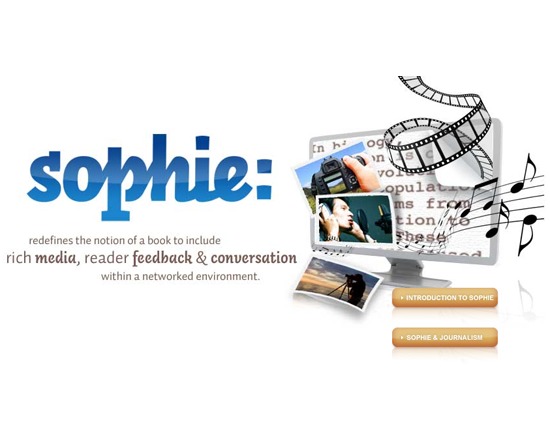
Sophie is a free, creative commons authoring tool from the Institute for the Future of the Book and the University of Southern California's School of Cinematic Arts that enables collaboration, reading and publication. Its highlights include an authoring environment that allows users to create complex networked multimedia documents, a reader than opens books in a browser without downloading additional software, comment frames for adding discussions within books, digital libraries compatible with the Sophe iPad app, timeline creation and collaborative book creation. As of version 2.1, Sophie includes HTML5 export for data integrating multimedia content and for use on a wide variety of devices.

Rated 3.0 out of 5.

Visualization

Yutzu

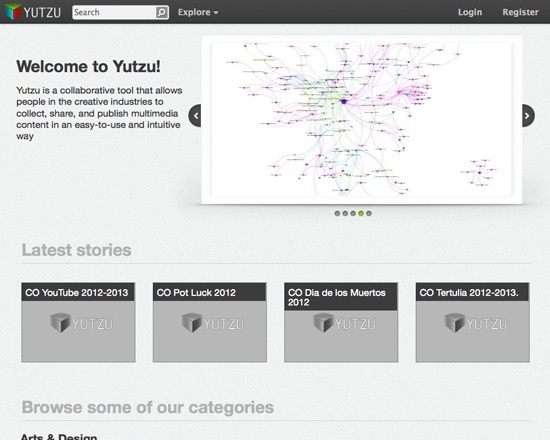
Yutzu is a collaborative tool for collecting and publishing multimedia content online, offered by the Cultureplex Lab at the University of Western Ontario. It is a web environment, designed to assist in the creative process, publication and visualization, and integrating a variety of multimedia tools. Yutzu has been used to showcase work, curate exhibitions and collections, and to facilitate teaching and learning.

Rated 0.0 out of 5.

Visualization

Prism

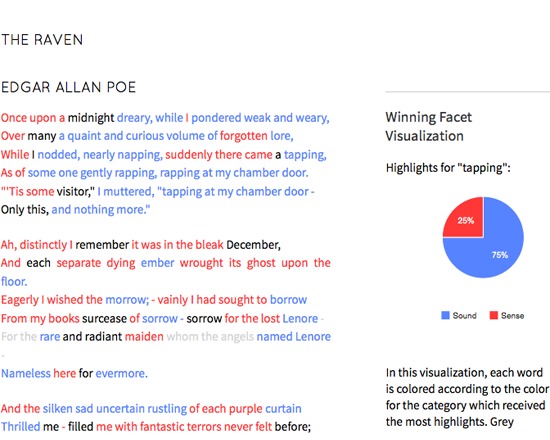
Prism is a visualization tool that represents texts based on crowdsourced interpretations. Users are encouraged to highlight words in a text according to categories ("facets"). Users' individual interpretations contribute to a visualization combining the interpretations of all users of the text. As such, it reveals patterns in subjective readings of a text.

Rated 0.0 out of 5.

Collaboration

Digital Mappa

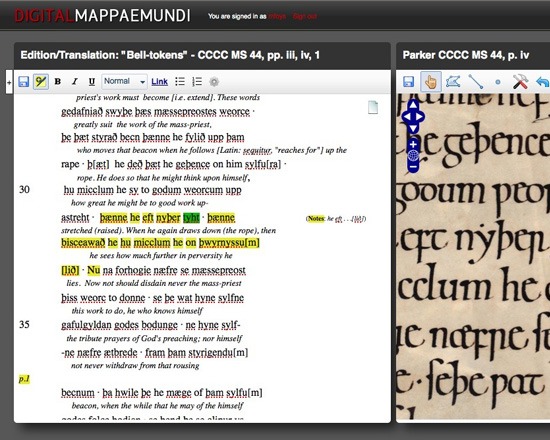
The DM is an environment for studying and annotating images and texts. It enables users to link together images, texts, or fragments of images or texts, such as a textual annotation of an image or text. It is aimed at scholars of English and French literature, art history, and musicology, and to work with digitized Old English, Latin and Old French manuscripts, medieval maps and scrolls.

Rated 0.0 out of 5.

Search

Comparator - HTML (TAPoRware)

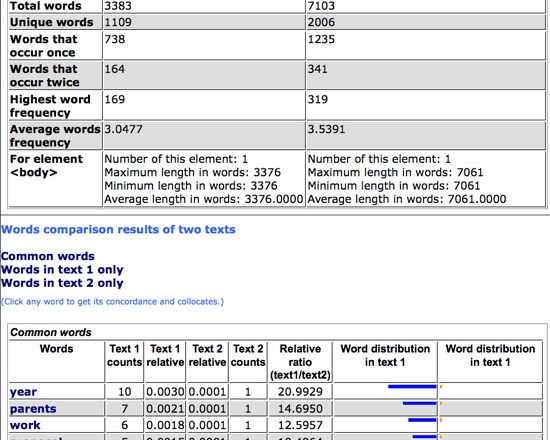
This tool compares two documents by comparing the words in each according to user specifications. XML and plain text versions are also available in the TAPoRware toolsets. This tool’s functionality has been incorporated into Voyant available online at www.voyant-tools.org

Rated 0.0 out of 5.

Collaboration

Scripto

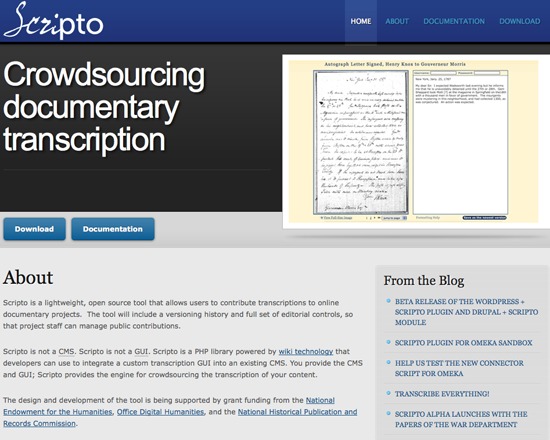
Scripto is a lightweight, open source tool for crowdsourcing transcriptions for Humanities projects. Projects utilizing Scripto can manage contributions via full editorial controls and a versioning history.

Rated 0.0 out of 5.