Skip to content
TAPoR Text Analysis Portal for Research

Tools

Sort by Name Rating ↓ Date

Visualization

Heurist Data Manager / Visualiser / Publisher

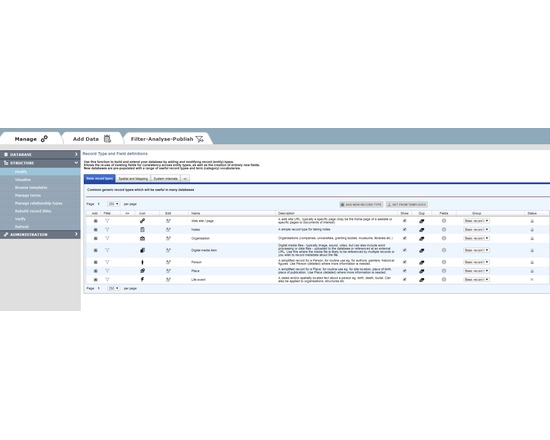
HEURIST (http://HeuristNetwork.org) is an extremely flexible, end-user oriented, web-based data management system designed specifically for Humanities data. Developed since 2005, it has been in active use across many projects since 2009. It is available both as a free web service for researchers (hosted at the University of Sydney Data Centre) or for installation on a physical or virtual server (Open Source on gitHub). Researchers can design, create, manage, analyse, visualise and publish their own richly-structured database(s) through a simple web interface, without the need for programmer(s). Quite complex databases can be built in a few hours by borrowing structures and vocabularies published by other users. Databases can be designed and built incrementally, as existing data are not affected by changes in structure. Databases created by Heurist are stored in MySQL with a repeatable structure facilitating sustainability and independent access by other software. Advanced features include record linking, graph structure, drill-down facet searches, rule-based queries, custom reports, linked map-timelines, network visualisation, normalised spreadsheet import, crosstabulation, XML feeds, XSLT transforms. The team provides initial email and skype assistance for project setup at no cost, and special customisations at modest cost. Heurist is applicable in many domains including History, Archaeology, Anthropology, Cultural Research, Linguistics, Media Studies etc. It handles everything from text, tags and categories, through networks of rich relationships and offset annotations, to images, video, spatial data and dating (including non-western systems and dating uncertainty). Sophisticated searches (including faceted and rule-based) can be saved, organised and rendered as layered interactive maps, timelines, network visualisations, crosstabulations, lists, custom reports, XML and XSLT transforms, all of which can easily be printed or embedded (live) in a website - Heurist provides the html code required to embed results in a web page or CMS. Databases can easily be migrated later to a personal or institutional server. Since the data are stored in a standard MySQL database with a fixed and well-documented structure, the data can be accessed directly via SQL from most programming languages independently of Heurist. Version 4.2 (Jan 2016 onwards) is available as a service via the Heurist website. Version 4 delivers a user-customisable interface of widgets, along with better mapping and visualisation. Existing version 3 databases are bidirectionally compatible with version 4.
Rated 5.0 out of 5.

Natural Language Processing

TUSTEP

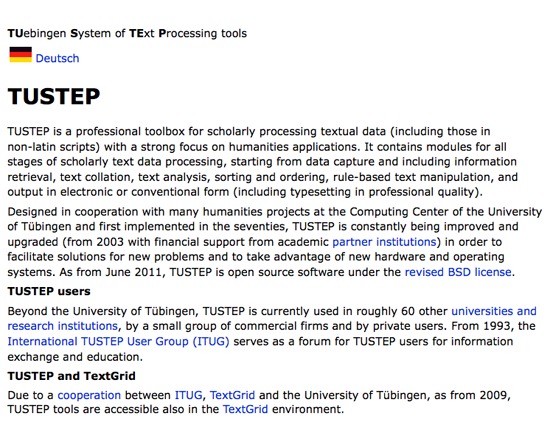
TUSTEP (Tubingen System of Text Processing Tools) is a free, open source, widely-used toolbox for text processing. It is aimed at scholarly audiences, can work with texts in both latin and non-latin scripts, and is primarily designed for humanites applications. Its modules include data capture, information retrieval, text collation, text analysis, sorting and ordering, rule-based textual manipulation, data export and typesetting. The user manual is only available in German at this time. This tool has been in continuous development since the 1960s.

Rated 5.0 out of 5.

Search

Voyant Tools 2.0 (Corpus View)

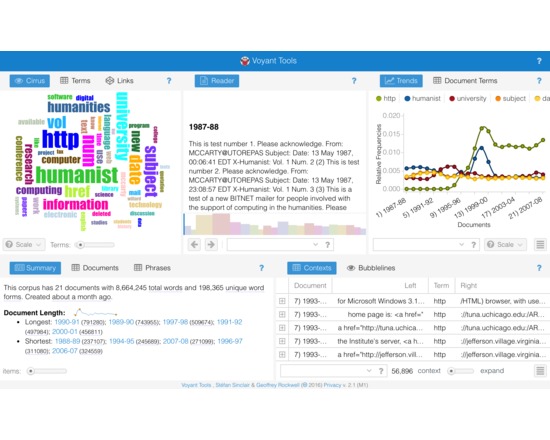
Voyant 2.0 is a complete rewrite of Voyant. It provides a suite of text analysis tools that will work with most texts you can upload or find on the web. These tools are combined in skins. For documentation see Documentation for Voyant 2.0

Rated 5.0 out of 5.

Search

TextGrid

TextGrid is a virtual research environment for text-based humanities scholarship. It offers a variety of tools and services for collaboratively creating, analyzing, editing and publishing texts. The TextGrid environment is split into two components, the Laboratory housing the tools and services, and the Repository for preserving reserach data and making it available to other scholars.

Rated 4.0 out of 5.

Collaboration

Sophie

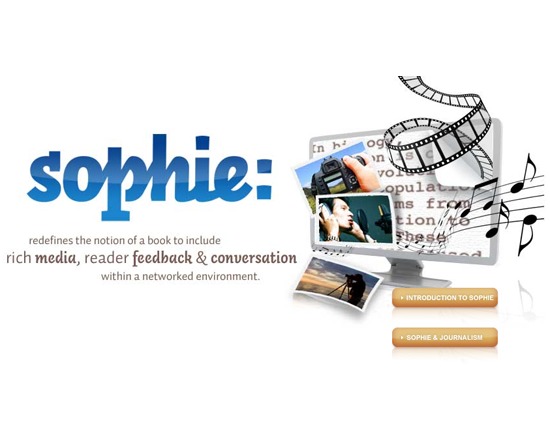
Sophie is a free, creative commons authoring tool from the Institute for the Future of the Book and the University of Southern California's School of Cinematic Arts that enables collaboration, reading and publication. Its highlights include an authoring environment that allows users to create complex networked multimedia documents, a reader than opens books in a browser without downloading additional software, comment frames for adding discussions within books, digital libraries compatible with the Sophe iPad app, timeline creation and collaborative book creation. As of version 2.1, Sophie includes HTML5 export for data integrating multimedia content and for use on a wide variety of devices.

Rated 3.0 out of 5.

Analysis

SimpleTCT

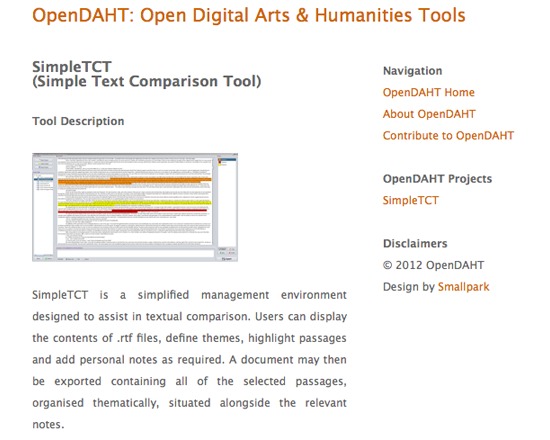
SimpleTCT (Simple Text Comparison Tool) is a free Java-based text comparison tool offered by Open Digital Arts & Humanities Tools (OpenDAHT). It offers a simplified management environment that enables users to display .rtf files, in which they may define themes, highlight passages and add researcher notes. The modified document can then be exported for later use.

Rated 3.0 out of 5.

Enrichment

Tokenization using NLTK

This Jupyter Notebook showcases the different methods of tokenization using NLTK

Rated 0.0 out of 5.

Natural Language Processing

Using Regular Expressions to Clean a Text

Techniques on using regular expressions to clean up a text for textual analysis.

Rated 0.0 out of 5.

Natural Language Processing

Using Regular Expressions to Clean Up Web Pages

A beginner's notebook on using Regex to strip website content of tags.

Rated 0.0 out of 5.

Collaboration

Topincs

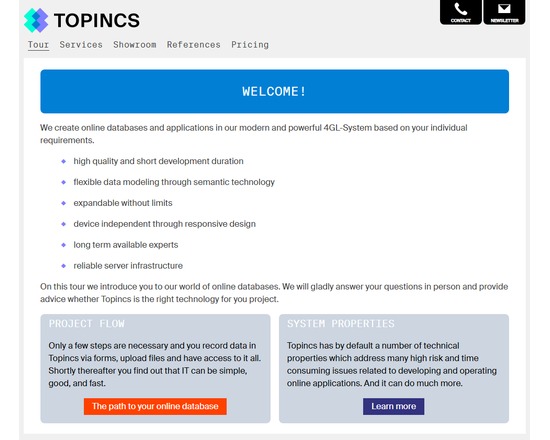
Topincs is a online database software. Given a data model, it allows data to be recorded and files to be uploaded and annotated through forms, data and files to be displayed and navigated through interconnected data sheets, and all that searched in the index. It overcomes the rigidity of relational databases by using semantic technology. In the simplest use case, a group of users can collaboratively edit information and upload files from any device with a web browser and an internet connection. Development time ranges between 1 and 8 hours. By designing and implementing services, the data can be manipulated, transformed and aggregated through an virtual object oriented programming interface driven by the data model. This allows sophisticated use cases where different user groups with different rights are presented a completely different application working on the same database. In these cases development time ranges between 2 and 20 days. A Topincs online database can be rented for a monthly fee. Topincs provide all services related to an online database: data modeling, programming, and support. They have special rates for educational institutions. Topincs can also be used as a Platform as a Service where the dark art of Topincs modeling and development must be studied online. The underlying semantic technology, Topic Maps, is taught there through hands on examples and will change your view on information technology.

Rated 0.0 out of 5.