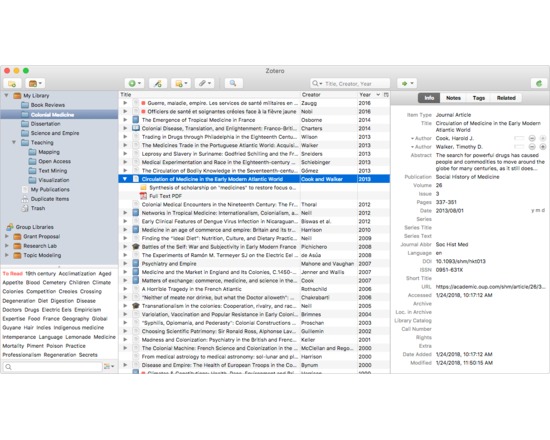
Zotero is a free tool that collects, manages and cites research sources. It stays on your web browser where you do your work and it's easy to use. It's being downloaded as a firefox extension, used with the chrome and safari browsers or used as a standalone tool. It allows you to attach pdfs, notes and images to your citations, organise them into easily searchable collections for different projects, and open office using any of over 2800 citation styles. references can be added to a zotero library in many different ways: directly from databases, journal websites, google scholar or the library catalogue, by referencing file import ( for example from an Endnote library), by dragging in pdfs from your hard drive, and by entering them manually.
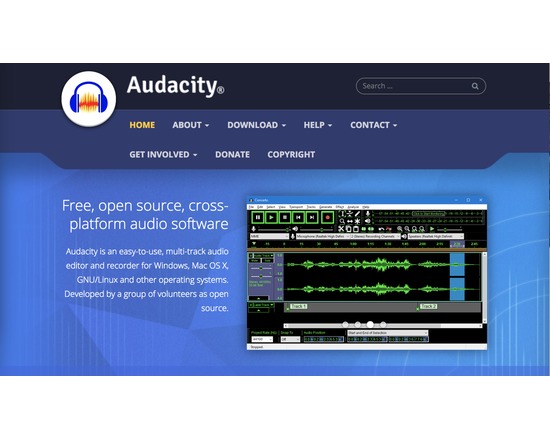
Audacity is a free, easy-to-use and multilingual audio editor and recorder. Basic features, as listed on their website, include: Record live audio. Record computer playback on any Windows Vista or later machine. Convert tapes and records into digital recordings or CDs. Edit WAV, AIFF, FLAC, MP2, MP3 or Ogg Vorbis sound files. Cut, copy, splice or mix sounds together. Change the speed or pitch of a recording.
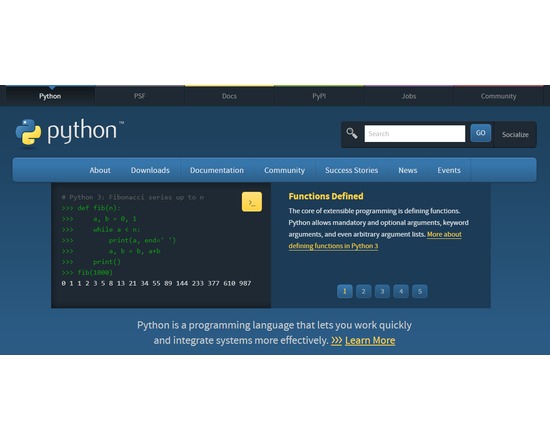
A general-purpose high-level programming language that places an emphasis upon code readability. Python supports a number of development models, including object oriented, imperative, and functional design. It provides automatic memory management and a fully dynamic type system. Features: Very clear, readable syntax Strong introspection capabilities Intuitive object orientation Natural expression of procedural code Full modularity, supporting hierarchical packages Exception-based error handling Very high level dynamic data types Extensive standard libraries and third party modules for virtually every task Extensions and modules easily written in C, C++ (or Java for Jython, or .NET languages for IronPython) Embeddable within applications as a scripting interface
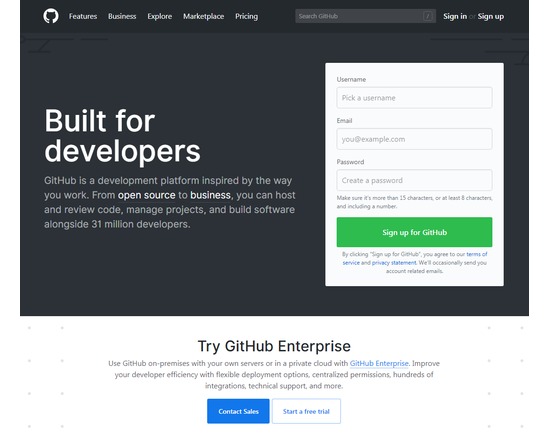
GitHub is a web-based repository service which offers the distributed revision control and source code management (SCM) functionality of GIT with a graphical user interface, desktop, and mobile integration. It also provides collaboration tools such as access control, wikis, task management, code review, bug tracking, and feature requests. It offers free accounts, often used to host opensource software projects, and private (paid) repositories. Projects on GitHub can be accessed and manipulated using the git command-line interface and all of the standard git commands work with it. GitHub also allows registered and non-registered users to browse public repositories on the site. Multiple desktop clients have also been created by GitHub and other third parties which integrate with the platform. GitHub is mainly used for code but can also be used for non-code files, it supports the following formats and features: 3D render files Photoshop's native PSD format can be previewed and compared to previous versions of the same file. Nested task-lists Documentation and wikis Small websites can be hosted from public repositories on GitHub. The URL format is http://projectname.github.io. Issue tracking (including feature requests) Visualization of geospatial data Gantt charts GitHub is a heavily used in the opensource development community but does not require hosted projects to meet the definition of Open Source.
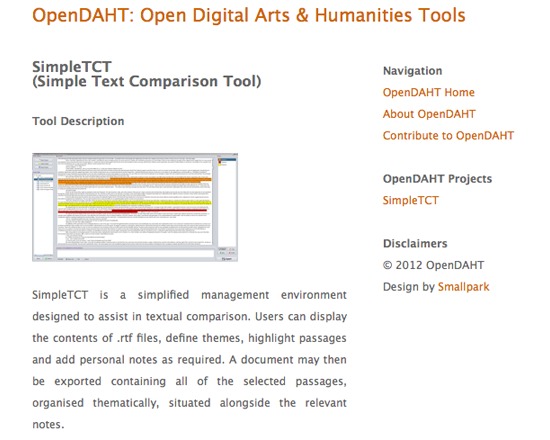
SimpleTCT (Simple Text Comparison Tool) is a free Java-based text comparison tool offered by Open Digital Arts & Humanities Tools (OpenDAHT). It offers a simplified management environment that enables users to display .rtf files, in which they may define themes, highlight passages and add researcher notes. The modified document can then be exported for later use.
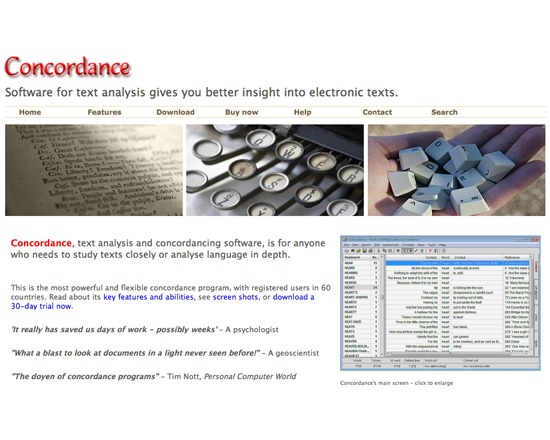
Concordance is a commerical text analysis and concordance tool originally developed for the Humanities (formerly available via the University of Dundee School of Humanities). It offers features for text analysis, word lists, indexes, full concordances, word frequencies and more. A free trial version is available.
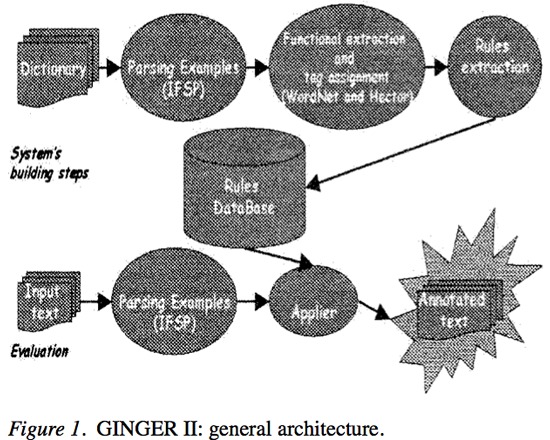
GINGER II is a word-sense disambiguator for English, offering a new approach to the algorithm developed for GINGER I. It directly extracts semantic disambiguation rules from dictionary example phrases, and semantically tags, syntactically parses and disambiguates those examples. This legacy tool has no affiliated web site and is no longer available.
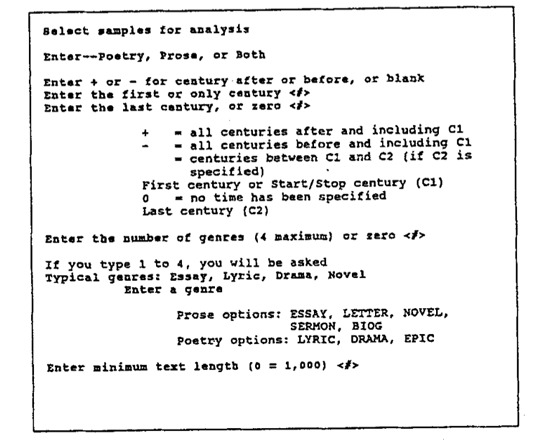
Micro-EYEBALL is a microprocessor version of the English language parser developed in the 1970s. This historically important legacy tool could also provide statistical descriptions of many linguistic features of a text. This tool is no longer available, and does not have a web presence.
Rated 0.0 out of 5.★★★★★0.0
Collate: Interactive Collation of Large Textual Traditions
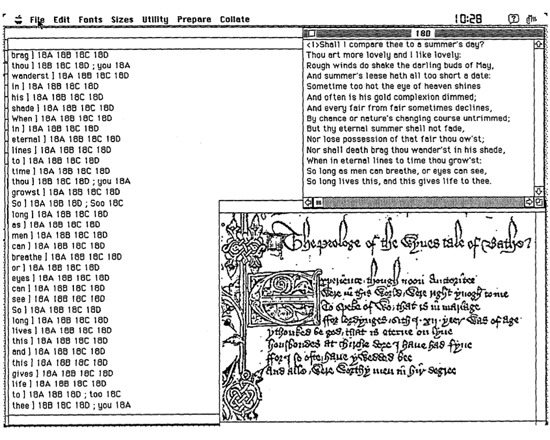
Collate was a program designed for scholars concerned with the difficulties of medieval vernacular traditions. It aimed to help scholars with the preparation of critical editions, and could collate up to a hundred texts. Collate was also capable of handling marked up text. It was available for Macintosh only, and could be purchased directly from its creator.
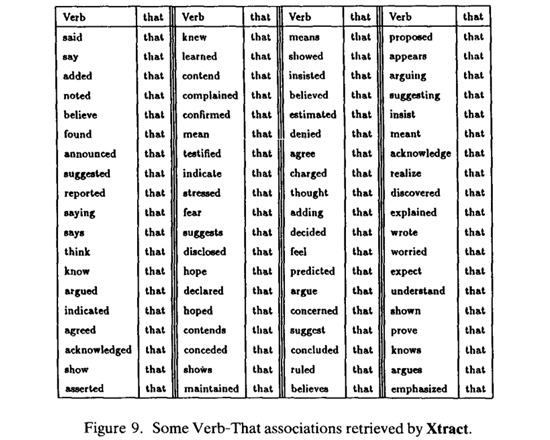
XTRACT was a tool for lexical collocation developed by Frank Smadja, then of Columbia University. It was designed to use statistical techniques to identify collocations of aribitrary length, and to generate syntactic relationships between words. This tool is no longer available and does not have a web presence.